3-Year Bachelor's: Retention, Tuition Cuts Analyzed
Anúncios
Are you looking to fast-track your higher education while shaving thousands off your total tuition bill? Accelerated Bachelor's Degree Programs condensed into a three-year timeline are transforming the post-secondary landscape.
This streamlined academic framework offers a faster route to graduation without compromising the core coursework needed for career readiness.
By trimming total credit hour requirements and leveraging year-round learning modules, institutions are drastically lowering attendance costs. Eliminating a full year of room, board, and campus fees translates to substantial direct savings for students seeking relief from soaring tuition expenses.
Early performance metrics reveal that these fast-track undergraduate tracks maintain strong student persistence and completion outcomes. Understanding how condensed degree pathways balance rigorous academic standards with financial relief is essential for prospective applicants planning their university journey.
The Rise of Accelerated 3-Year Bachelor's Degrees
The push for accelerated degree programs stems from a growing demand for more efficient and affordable higher education options. Institutions are responding to market pressures and student needs by redesigning traditional four-year curricula into condensed three-year formats.
Anúncios
This shift is not merely about speed; it involves a fundamental rethinking of course sequencing, credit loads, and summer session utilization. The goal is to deliver the same quality education in a shorter timeframe, making higher education more accessible.
Key drivers include the rising cost of tuition, the increasing burden of student loan debt, and the desire for graduates to enter the workforce sooner. These factors collectively contribute to the appeal of 3-year bachelor retention strategies.
Curriculum Redesign and Academic Rigor
Implementing a 3-year bachelor retention program requires meticulous curriculum redesign to ensure academic rigor is maintained. Universities must condense material without compromising the depth of learning or essential skill development, a complex task.
This often involves eliminating elective courses, streamlining core requirements, and intensifying course loads during semesters and summer terms. Faculty play a crucial role in adapting their teaching methods to this accelerated pace.
Streamlined course sequences to avoid redundancy.
Increased credit hours per semester or through summer terms.
Emphasis on core competencies and practical skills.
Integration of experiential learning earlier in the program.
The success of these redesigned curricula hinges on effective planning and continuous assessment to ensure students are adequately prepared for their careers or further graduate studies, maintaining high 3-year bachelor retention rates.
Analyzing Retention Rates in Accelerated Programs
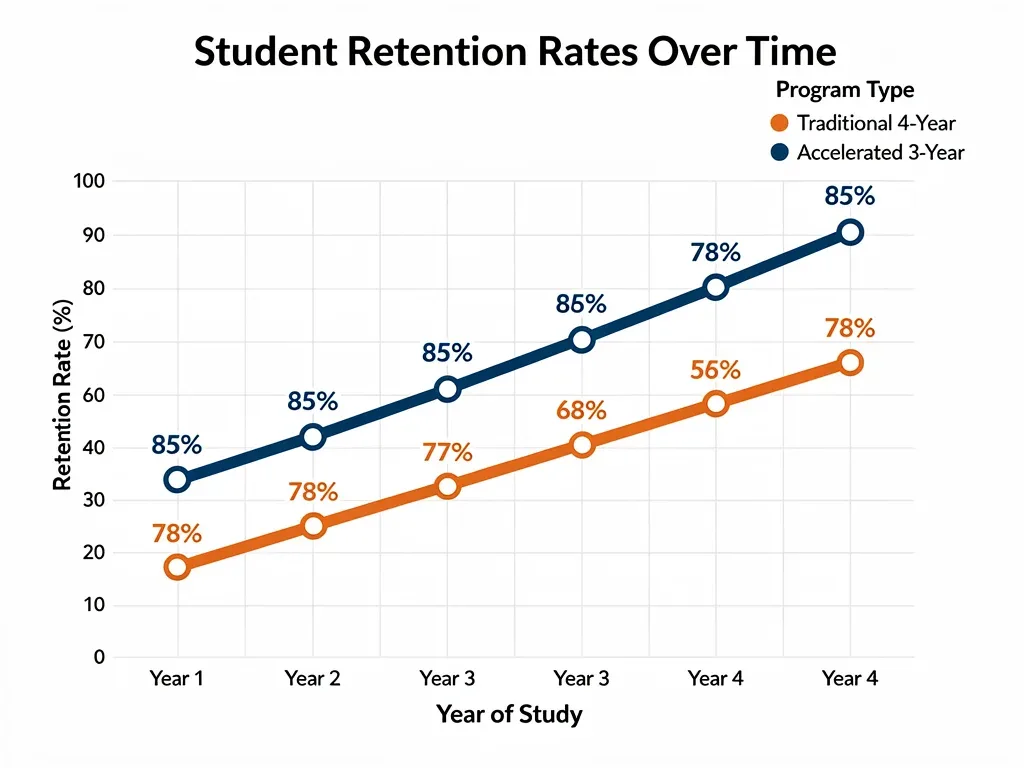
Student retention is a critical metric for any educational program, and accelerated 3-Year Bachelor's Degree Programs face unique challenges in this area. The intense academic pace and reduced social integration time can impact a student's ability to persist.
Early data suggests a mixed bag, with some institutions reporting comparable retention rates to their traditional programs, while others observe slight declines. Factors such as robust academic support, strong advising, and cohort-based learning models appear to be crucial for success.
Anúncios
The compressed timeline may not suit all students, particularly those who benefit from a more gradual acclimatization to university life or those requiring more time for personal development. Understanding these nuances is key to improving 3-year bachelor retention.
Factors Influencing Student Persistence
Several factors contribute to student persistence in accelerated programs. Academic preparedness is paramount, as students must be ready to handle a demanding workload from day one, impacting 3-year bachelor retention.
Financial stability, even with tuition reductions, also plays a significant role. Students juggling work and intense studies may find the pressure unsustainable. Mental health support and access to counseling services are increasingly recognized as vital.
Strong academic advising and mentoring.
Peer support networks and cohort models.
Access to mental health and wellness resources.
Clear pathways for academic and career progression.
Institutions must proactively address these factors to foster an environment where students can thrive and achieve their degrees within the accelerated timeframe, ensuring positive 3-year bachelor retention outcomes.
The Impact of 25% Tuition Reductions
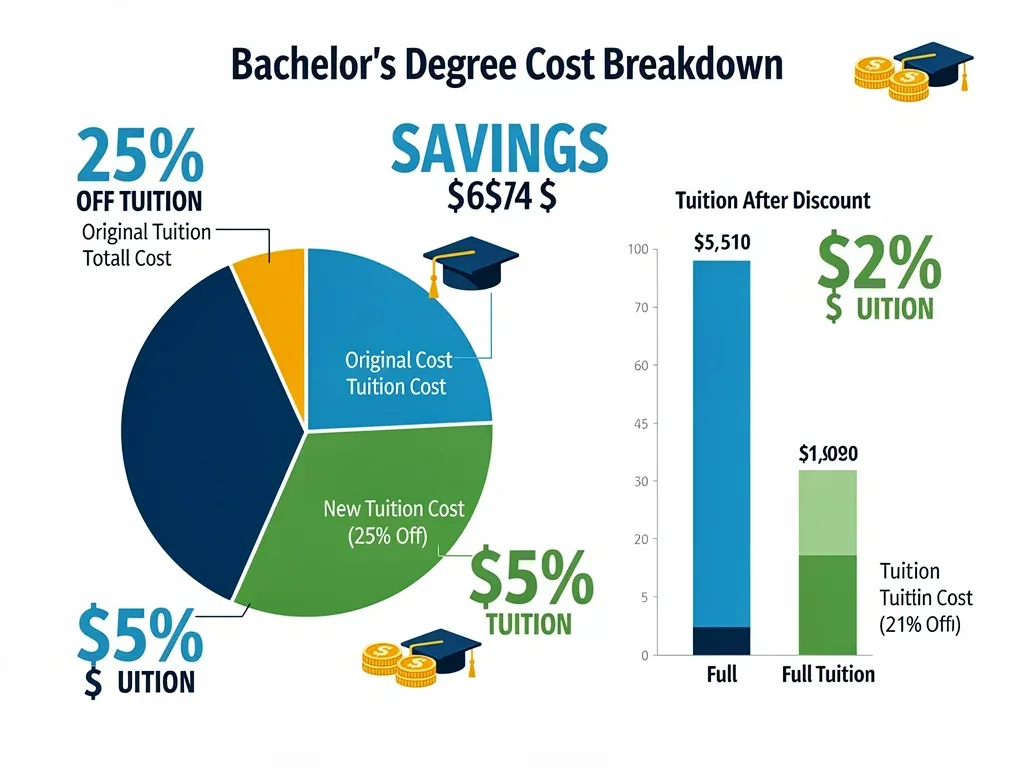
A 25% tuition reduction is a significant incentive for students considering accelerated programs, directly addressing one of the biggest barriers to higher education. This financial benefit can make a substantial difference in overall affordability and reduce post-graduation debt.
For many families, shaving off an entire year's worth of tuition, fees, and living expenses represents tens of thousands of dollars in savings. This makes accelerated 3-Year Bachelor's Degree Programs a highly attractive option.
However, the real impact of these reductions on student enrollment and retention needs careful examination. While enticing, the savings must be weighed against the intensity of the academic program and potential opportunity costs, impacting 3-year bachelor retention.
Financial Accessibility and Enrollment Trends
The promise of reduced tuition directly influences enrollment trends, especially among students from lower and middle-income backgrounds. These programs offer a faster, more economical route to a degree, broadening access to higher education.
Universities report an increase in inquiries and applications for these programs, indicating a strong market demand for cost-effective options. The 25% tuition reduction acts as a powerful differentiator in a competitive landscape.
Increased access for financially constrained students.
Reduced overall student loan debt for graduates.
Enhanced marketability for institutions offering such programs.
Potential for a more diverse student body.
Analyzing the long-term effects of these financial incentives on student demographics and academic outcomes will be crucial for understanding the true value proposition of 3-year bachelor retention programs.
Challenges and Opportunities for Institutions
Implementing accelerated 3-Year Bachelor's Degree Programs presents both considerable challenges and exciting opportunities for universities. Resource allocation, faculty workload, and institutional reputation are all factors to consider.
Maintaining academic quality while accelerating the curriculum requires significant investment in faculty development, advising services, and student support. Institutions must ensure their infrastructure can support the demands of a compressed academic calendar.
However, these programs also offer a chance for institutions to innovate, attract a new cohort of students, and enhance their public image as forward-thinking and student-centric. The potential for improved 3-year bachelor retention and financial sustainability is significant.
Faculty Adaptation and Support Systems
Faculty adaptation is a cornerstone of successful accelerated programs. Educators must adjust their teaching methodologies to a faster pace, often requiring them to condense material and rethink assessment strategies.
Providing adequate support, training, and incentives for faculty is essential to ensure they are equipped for this shift and to prevent burnout. This includes professional development opportunities focused on accelerated learning pedagogies.
Training in condensed curriculum delivery.
Support for developing intensive course materials.
Recognition for extra workload and innovation.
Access to resources for student engagement in accelerated settings.
The commitment of faculty directly impacts the quality of education delivered and, consequently, the 3-year bachelor retention rates of students in these demanding programs.
Student Perspectives: Benefits and Drawbacks
For students, the decision to enroll in accelerated 3-Year Bachelor's Degree Programs is a complex one, weighing the clear financial and time-saving benefits against potential academic and social pressures.
The allure of entering the job market a year earlier, with less debt, is a powerful motivator. This allows graduates to begin their careers or pursue advanced degrees sooner, gaining a head start in their professional lives.
However, the intensive nature of these programs means less time for extracurricular activities, internships, or personal exploration, which are often integral to the traditional college experience. Students must assess if they are prepared for the demanding pace, ensuring their 3-year bachelor retention.
Time Management and Social Integration
Effective time management is crucial for students in accelerated programs. The condensed curriculum leaves little room for procrastination, requiring discipline and strong organizational skills from the outset.
Social integration can also be a challenge, as less time is available for participation in clubs, sports, or social events. Universities must create intentional opportunities for accelerated students to connect and build community, supporting 3-year bachelor retention.
Early career entry and reduced debt burden.
Intense academic workload and less free time.
Potential for reduced social engagement.
Requires high levels of self-discipline and motivation.
Ultimately, the suitability of an accelerated program depends on individual student preferences, academic readiness, and personal goals. The trade-offs are significant and require careful consideration for 3-year bachelor retention.
Policy Implications and Future Outlook
The growing popularity of accelerated 3-Year Bachelor's Degree Programs has significant policy implications for state and federal governments, as well as accrediting bodies. Standardizing these programs and ensuring quality are key concerns.
Policymakers are examining how financial aid structures and accreditation standards can adapt to these new models without penalizing students or compromising educational integrity. The long-term impact on the workforce and economic development is also a consideration.
As more institutions adopt these programs, there will be a need for robust data collection and analysis to inform future policy decisions and ensure equitable access and outcomes. This will directly influence 3-year bachelor retention efforts nationwide.
Accreditation and Quality Assurance
Accrediting bodies play a vital role in ensuring that accelerated programs maintain the same high standards as traditional degrees. This involves scrutinizing curriculum design, faculty qualifications, and student learning outcomes, which impact 3-year bachelor retention.
Developing specific guidelines for 3-year degrees may be necessary to address their unique structure and pace. This ensures that graduates are well-prepared and that their degrees are recognized and respected by employers and graduate schools.
Adaptation of existing accreditation standards for accelerated formats.
Focus on learning outcomes and competency demonstration.
Ensuring faculty preparedness for intensive teaching.
Monitoring student support services for accelerated cohorts.
The ongoing dialogue between institutions, policymakers, and accreditors will shape the future landscape of accelerated higher education, influencing the effectiveness of 3-year bachelor retention models.
Comparative Analysis: 3-Year vs. 4-Year Degrees
A thorough comparative analysis between traditional four-year programs and accelerated 3-Year Bachelor's Degree Programs is essential. This comparison extends beyond just time and cost, encompassing academic depth, student experience, and career outcomes.
While 3-year programs offer clear financial advantages and quicker entry into the workforce, 4-year degrees often provide more flexibility for exploration, internships, and broader personal development. Each model caters to different student needs and aspirations.
Research is continually emerging to assess if graduates from accelerated programs are equally competitive in the job market or for graduate school admissions. Initial findings suggest positive outcomes, but long-term data will be more conclusive regarding 3-year bachelor retention.
Career Outcomes and Graduate School Preparedness
The ultimate measure of a degree program's success often lies in the career outcomes of its graduates. For accelerated programs, demonstrating comparable or superior employment rates and graduate school acceptance is crucial.
Early indicators suggest that employers value the efficiency and focused skill sets of 3-year degree holders. However, the perception of these degrees by various industries and graduate programs is still evolving, impacting 3-year bachelor retention.
Faster entry into the professional workforce.
Potential for reduced student loan burden affecting career choices.
Adaptability of accelerated graduates to demanding environments.
Ongoing assessment of employer and graduate school perceptions.
Continued tracking of alumni from both program types will provide invaluable data to help prospective students make informed decisions about their educational pathways and the long-term benefits of 3-year bachelor retention.
Key Point | Brief Description |
|---|---|
Program Structure | Condensed curriculum, intense pace, often utilizes summer sessions. |
Retention Rates | Vary by institution; strong support crucial for success. |
Tuition Reduction | 25% savings significantly enhances affordability and access. |
Student Experience | Faster career entry versus potential limits on extracurriculars. |
Frequently Asked Questions About Accelerated Degrees
What are the primary benefits of a 3-year bachelor's degree?▼
The main benefits include significant cost savings due to one less year of tuition and living expenses, and faster entry into the workforce or graduate school. This can reduce student debt and accelerate career progression, impacting 3-year bachelor retention positively.
How do retention rates compare with traditional 4-year programs?▼
Retention rates vary, with some institutions achieving comparable figures to 4-year programs through robust support systems. Others may see slight dips due to the intense academic pace. Effective advising and student services are crucial for 3-year bachelor retention.
Is a 25% tuition reduction common for these programs?▼
While a 25% tuition reduction is a compelling offer, it is not universally applied across all accelerated programs. Many institutions offer substantial savings, but the exact percentage can differ. Prospective students should confirm specific financial aid details for 3-year bachelor retention.
Do employers value 3-year degrees as much as 4-year degrees?▼
Employer perception is evolving, but generally, a degree's value is based on the skills and knowledge acquired, not solely its duration. Many employers appreciate the efficiency and focus of accelerated graduates. Outcomes data for 3-year bachelor retention are promising.
What kind of student is best suited for an accelerated program?▼
Students who are highly motivated, academically strong, and possess excellent time management skills are typically best suited. Those with clear career goals and a desire to enter the workforce quickly also thrive in these intensive programs, improving 3-year bachelor retention.
Looking Ahead
The landscape of higher education is undeniably shifting, with accelerated 3-Year Bachelor's Degree Programs leading a significant part of this evolution. Institutions will continue to refine these models, focusing on enhancing student support to bolster 3-year bachelor retention and ensure academic excellence.
Prospective students must carefully weigh the advantages of reduced cost and time against the demands of an intensive curriculum.
As more data becomes available, the long-term impacts on graduate success, career trajectories, and overall societal value will become clearer. This ongoing assessment will shape future policy and institutional strategies, further integrating these accelerated pathways into the mainstream of higher education.
The move towards more flexible and affordable degree options reflects a broader trend in education to meet contemporary challenges. The success of 3-year bachelor retention models will largely depend on their ability to consistently deliver quality education while addressing student needs effectively.