Navigating Digital Asset Regulations in 2026: A Planner’s Guide

Anúncios
As regulatory frameworks for cryptocurrencies mature, financial advisors face new compliance and portfolio management requirements.
Navigating Digital Asset Regulations in 2026 outlines key legislative shifts, asset classification standards, and reporting updates to help advisors maintain compliance and safeguard client assets in the evolving market.
The Evolving Landscape of Digital Asset Regulations in 2026
The regulatory environment for digital assets is characterized by its dynamic nature, with various governmental bodies continuously working to establish comprehensive guidelines.
Anúncios
This ongoing evolution means that financial planners must remain vigilant, adapting their strategies to align with the latest legal and compliance requirements.
By 2026, a more consolidated approach to digital asset regulations is anticipated, moving beyond the fragmented oversight seen in previous years.
This shift will likely bring greater clarity but also introduce new complexities for those involved in cryptocurrency investments. Understanding these foundational changes is the first step toward effective planning.
Anúncios
The goal of these regulations is multifaceted: to protect consumers, prevent illicit activities, ensure market stability, and foster innovation within the digital asset space.
Financial planners play a crucial role in translating these regulatory intentions into practical advice for their clients, making the process of navigating digital asset regulations in 2026 a critical skill.
Key Regulatory Bodies and Their Influence
Several key regulatory bodies in the United States are shaping the future of digital asset regulations, each with its unique jurisdiction and approach.
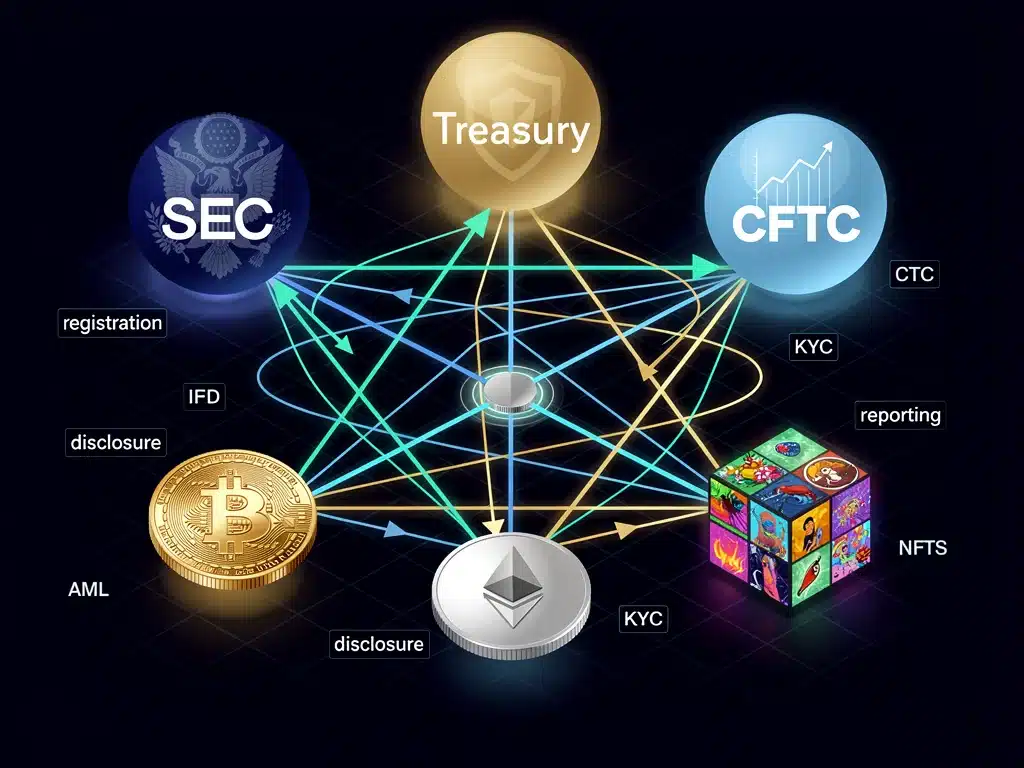
The Securities and Exchange Commission (SEC), the Commodity Futures Trading Commission (CFTC), and the Treasury Department, through agencies like FinCEN, are at the forefront of these efforts.
The SEC typically focuses on digital assets classified as securities, ensuring investor protection and market transparency. The CFTC, on the other hand, oversees digital assets deemed commodities, regulating derivatives markets.
FinCEN concentrates on anti-money laundering (AML) and counter-terrorist financing (CTF) measures, impacting all entities dealing with digital assets.
Financial planners must understand the specific mandates of each agency to accurately assess the regulatory status of different cryptocurrency investments.
This multi-agency oversight underscores the complexity of navigating digital asset regulations in 2026 and the need for a holistic understanding.
- SEC’s classification of digital assets as securities and its implications for offerings and trading platforms.
- CFTC’s oversight of crypto commodities and futures, impacting derivative products and market integrity.
- FinCEN’s emphasis on AML/CTF compliance for all digital asset transactions, requiring robust reporting.
- State-level regulations, such as New York’s BitLicense, adding another layer of compliance for businesses.
Anticipated Regulatory Shifts Impacting Cryptocurrency Investments
As 2026 approaches, several significant regulatory shifts are expected to come into sharper focus, directly influencing how financial planners approach cryptocurrency investments.
These shifts will likely address areas such as stablecoins, decentralized finance (DeFi), and non-fungible tokens (NFTs), bringing them under more defined regulatory umbrellas.
One major area of focus will be stablecoins, with regulators seeking to establish clear frameworks for their issuance and backing to ensure financial stability.
The classification and oversight of DeFi protocols are also high on the agenda, as these platforms present unique challenges regarding consumer protection and systemic risk.
Additionally, the regulatory treatment of NFTs, particularly those with utility or investment characteristics, is expected to evolve.
Financial planners must be prepared for these changes to effectively advise clients on the risks and opportunities associated with these diverse digital assets, further emphasizing the importance of navigating digital asset regulations in 2026.
The Rise of Comprehensive Digital Asset Frameworks
The trend towards comprehensive digital asset frameworks suggests a move away from piecemeal regulation towards a more unified approach.
This could involve new legislation or executive orders designed to provide a cohesive regulatory environment for the entire digital asset ecosystem.
Such frameworks aim to harmonize various regulatory aspects, including licensing requirements, disclosure standards, and market conduct rules.
For financial planners, this means a potential simplification of compliance, but also a need to understand a broader set of interconnected rules.
The impact on cryptocurrency investments will be substantial, requiring careful portfolio adjustments.
These comprehensive frameworks are critical for promoting mainstream adoption of digital assets by providing legal certainty and reducing regulatory arbitrage.
Financial planners who proactively engage with these frameworks will be better positioned to serve their clients’ interests and capitalize on emerging opportunities within the digital asset space, making navigating digital asset regulations in 2026 a strategic advantage.
The regulatory landscape is not only about restrictions; it also aims to foster innovation within a secure environment.
Financial planners should view these upcoming frameworks as an opportunity to build more robust and compliant investment strategies. This proactive stance is essential for long-term success in the digital asset market.
Compliance Challenges and Opportunities for Financial Planners
The evolving nature of digital asset regulations presents both significant compliance challenges and unique opportunities for financial planners.
Staying abreast of every new rule and guideline requires dedication, continuous education, and a proactive approach to risk management.
Compliance challenges often stem from the novelty and complexity of digital assets, making it difficult to apply traditional financial regulations directly.
Financial planners must develop specialized knowledge in areas such as tokenomics, blockchain technology, and the specific legal classifications of various digital assets to ensure their advice remains compliant.
However, these challenges also create opportunities. Financial planners who master the art of navigating digital asset regulations in 2026 can position themselves as expert advisors in a rapidly growing and underserved market.
This specialization can lead to new client acquisition and enhanced service offerings, setting them apart from competitors.
Integrating Digital Assets into Client Portfolios
Successfully integrating digital assets into client portfolios requires more than just understanding the regulations; it demands a thoughtful approach to asset allocation, risk assessment, and client education.
Financial planners must evaluate each client’s risk tolerance and investment objectives before recommending cryptocurrency investments.
Diversification remains a key principle, even within the digital asset space, where volatility can be high.
Planners should consider allocating a small, appropriate percentage of a client’s portfolio to digital assets, focusing on established cryptocurrencies or regulated investment vehicles.
This strategic integration helps manage risk while capturing potential growth.
Educating clients about the inherent risks and rewards of digital assets is paramount.
Financial planners must clearly communicate the speculative nature of cryptocurrency investments, the potential for significant price fluctuations, and the importance of long-term perspectives.
This transparency builds trust and manages expectations effectively, crucial for navigating digital asset regulations in 2026.
- Assess client risk tolerance and investment horizons carefully before recommending digital assets.
- Prioritize diversification, even within the crypto space, to mitigate volatility.
- Educate clients thoroughly on the risks, rewards, and long-term outlook of cryptocurrency investments.
- Utilize regulated investment vehicles where available to enhance security and compliance.
Tax Implications of Digital Asset Regulations in 2026
Taxation remains one of the most complex aspects of digital asset regulations, and 2026 is expected to bring increased clarity and enforcement in this area.
Financial planners must be well-versed in the tax implications of various cryptocurrency transactions, including buying, selling, trading, staking, and mining.
The Internal Revenue Service (IRS) currently treats virtual currency as property for tax purposes, meaning capital gains and losses apply to most transactions.
However, specific rules for different types of activities, such as DeFi lending or NFT sales, are continually being refined. Staying updated on these nuances is crucial for accurate tax planning.
Financial planners should advise clients on proper record-keeping and reporting practices to ensure compliance with IRS guidelines.
This includes tracking transaction dates, cost bases, and fair market values at the time of disposition. Proactive tax planning is essential for minimizing liabilities and avoiding penalties when navigating digital asset regulations in 2026.
Reporting Requirements and Software Solutions
The complexity of tracking and reporting cryptocurrency transactions often necessitates the use of specialized software solutions.
These tools can help aggregate transaction data from various exchanges and wallets, calculate capital gains and losses, and generate necessary tax forms.
Financial planners should guide clients in selecting reputable crypto tax software and ensure they understand how to use it effectively.
Accurate reporting is not just a matter of compliance but also a critical component of sound financial planning. The IRS is increasing its scrutiny of digital asset holdings, making precise record-keeping more important than ever.
Furthermore, understanding the implications of potential future regulations on tax reporting, such as new information reporting requirements for crypto brokers, is vital.
Financial planners who can anticipate these changes will provide invaluable service to their clients, helping them seamlessly adapt to new obligations and effectively manage their cryptocurrency investments.
The landscape of digital asset regulations in 2026 will undoubtedly feature stricter enforcement of tax laws.
Financial planners must integrate robust tax planning into their cryptocurrency investment strategies to ensure clients are fully prepared for these evolving requirements.
Client Education and Risk Management in Digital Assets
Effective client education is paramount when dealing with digital assets, as many investors may not fully grasp the intricacies and risks involved.
Financial planners have a responsibility to provide clear, unbiased information, empowering clients to make informed decisions about their cryptocurrency investments.
This education should cover fundamental concepts such as blockchain technology, different types of cryptocurrencies, market volatility, and the importance of secure storage solutions.
Explaining the difference between custodial and non-custodial wallets, and the risks associated with each, is a critical component of comprehensive client guidance.
Moreover, financial planners must emphasize a disciplined approach to risk management.
This includes setting realistic expectations, advising against speculative trading, and ensuring that cryptocurrency investments align with the client’s broader financial goals.
Transparent communication is key to successfully navigating digital asset regulations in 2026.
Developing Robust Risk Assessment Frameworks
To effectively manage risk, financial planners need to develop and implement robust risk assessment frameworks specifically tailored for digital assets.
These frameworks should consider both market risks, such as price volatility, and operational risks, including cybersecurity threats and platform failures.
Understanding the liquidity of different digital assets and the potential impact of regulatory changes on market access is also crucial.
Financial planners should regularly review and update these frameworks to reflect the latest market conditions and regulatory developments. This iterative process ensures that client portfolios remain resilient.
Furthermore, advising clients on diversification strategies beyond just allocating across different cryptocurrencies, but also across traditional asset classes, helps mitigate overall portfolio risk.
A well-rounded approach to risk management is indispensable for those guiding clients through the complexities of cryptocurrency investments and successfully navigating digital asset regulations in 2026.
- Educate clients on blockchain fundamentals, cryptocurrency types, and market dynamics.
- Discuss secure storage options, including custodial vs. non-custodial wallets.
- Implement tailored risk assessment frameworks for digital assets, considering market and operational risks.
- Emphasize diversification and realistic expectations for cryptocurrency investments.
Leveraging Technology for Regulatory Compliance
In the complex world of digital asset regulations, technology can be a powerful ally for financial planners.
Leveraging advanced software and analytical tools can streamline compliance processes, enhance data security, and provide real-time insights into market and regulatory changes.
Blockchain analytics platforms, for example, can help track the provenance of digital assets, identify suspicious transactions, and ensure adherence to AML/CTF requirements.
Portfolio management software with integrated crypto capabilities can simplify the tracking of holdings, performance, and tax-related data.
Embracing these technological solutions not only improves efficiency but also strengthens a planner’s ability to demonstrate compliance to regulators and provide accurate advice to clients.
This technological integration is becoming indispensable for financial professionals navigating digital asset regulations in 2026.
Staying Informed with Regulatory Intelligence Tools
Given the rapid pace of regulatory change, financial planners must utilize regulatory intelligence tools to stay continuously informed.
These platforms aggregate news, legal updates, and policy proposals from various governmental and industry sources, providing a consolidated view of the evolving landscape.
Subscribing to specialized newsletters, attending webinars, and participating in professional forums focused on digital asset regulations can also provide valuable insights.
The goal is to anticipate changes rather than merely react to them, allowing for proactive adjustments to client strategies and internal compliance protocols.
By investing in and utilizing these technological resources, financial planners can maintain a competitive edge and ensure their practices are always aligned with the latest requirements.
This commitment to ongoing learning and technological adoption is a hallmark of effective financial planning in the era of digital assets, especially when navigating digital asset regulations in 2026.

The effective use of technology is no longer optional but a necessity for financial planners dealing with cryptocurrency investments.
It enables them to manage the complexities of digital asset regulations with greater precision and confidence, ultimately benefiting their clients.
The Role of Professional Development and Certifications
For financial planners, continuous professional development and specialized certifications are becoming increasingly vital in the realm of digital assets.
The unique nature of cryptocurrency investments demands a deeper understanding that goes beyond traditional financial planning curricula.
Certifications focused on blockchain technology, digital asset investing, and crypto regulations can significantly enhance a planner’s credibility and expertise.
These programs provide structured learning paths that cover technical aspects, market dynamics, and the evolving legal framework, preparing professionals for the challenges of the digital economy.
Engaging in ongoing education ensures that financial planners remain at the forefront of industry knowledge, allowing them to provide the most current and relevant advice to their clients.
This commitment to learning is a critical factor in successfully navigating digital asset regulations in 2026 and maintaining a competitive edge.
Building a Network of Digital Asset Experts
Beyond formal education, building a strong network of digital asset experts can provide invaluable support and insights for financial planners.
Collaborating with legal professionals specializing in crypto law, blockchain developers, and cybersecurity experts can offer diverse perspectives and practical solutions to complex issues.
Participating in industry conferences, workshops, and online communities dedicated to digital assets fosters knowledge exchange and partnership opportunities.
These interactions can help financial planners stay informed about emerging trends, best practices, and potential regulatory shifts before they become mainstream.
A collaborative approach ensures that financial planners have access to a broad spectrum of expertise, enabling them to address client concerns comprehensively and confidently.
This collective intelligence is particularly beneficial when tackling the multifaceted challenges of cryptocurrency investments and effectively navigating digital asset regulations in 2026.
- Pursue specialized certifications in blockchain and digital asset investing.
- Engage in continuous professional development to stay updated on regulatory changes.
- Network with legal, technical, and cybersecurity experts in the digital asset space.
- Participate in industry events and communities for knowledge exchange and insights.
Global Regulatory Trends and Their Local Impact
While this guide focuses on the United States, global regulatory trends significantly influence the domestic landscape of digital asset regulations.
Many countries are developing their own frameworks, and international cooperation is becoming increasingly common to address cross-border challenges posed by digital assets.
Financial planners should be aware of major regulatory developments in jurisdictions like the European Union, the UK, and Asia, as these often set precedents or inform future policy decisions in the US.
Harmonization efforts among international bodies could lead to more standardized approaches to cryptocurrency investments globally.
Understanding these global trends provides a broader context for anticipating local regulatory changes and their potential impact on client portfolios.
A global perspective is essential for comprehensive financial planning in an interconnected digital economy, especially when navigating digital asset regulations in 2026.
Preparing for Cross-Border Digital Asset Transactions
As clients increasingly engage in cross-border digital asset transactions, financial planners must be prepared to advise on the associated regulatory and tax implications.
Different countries may have varying rules regarding capital gains, reporting requirements, and AML/CTF compliance, which can create complexities for international investors.
Advisors should educate clients on the importance of understanding the regulations of all relevant jurisdictions when engaging in international digital asset activities.
This includes being aware of potential reporting obligations in multiple countries and the implications for tax residency.
Consulting with international tax and legal experts may be necessary for clients with significant cross-border digital asset holdings.
Financial planners who can offer guidance in this complex area will provide exceptional value, ensuring clients remain compliant and avoid unforeseen legal or financial pitfalls while successfully navigating digital asset regulations in 2026.
| Key Regulatory Area | 2026 Impact for Planners |
|---|---|
| Asset Classification | Clearer definitions for securities vs. commodities, influencing investment advice. |
| Stablecoin Oversight | Enhanced regulations for issuance and backing, affecting portfolio stability. |
| Tax Reporting | Stricter enforcement and new requirements for tracking crypto transactions. |
| DeFi Protocols | Increased scrutiny on consumer protection and systemic risk in decentralized finance. |
Frequently Asked Questions About Digital Asset Regulations
The main regulatory bodies include the SEC, which focuses on digital assets as securities, and the CFTC, which oversees digital assets as commodities. Additionally, FinCEN addresses anti-money laundering and counter-terrorist financing for all digital asset transactions, creating a multi-layered oversight approach for financial planners.
New stablecoin regulations in 2026 are expected to establish clearer frameworks for their issuance and backing. This aims to ensure financial stability and investor protection, potentially making stablecoins a more reliable component of cryptocurrency investments. Financial planners should monitor these developments closely for portfolio adjustments.
Financial planners must understand that the IRS treats virtual currency as property, subjecting transactions to capital gains and losses. Anticipate stricter enforcement and new reporting requirements for various crypto activities, including staking and DeFi. Accurate record-keeping and tax software are crucial for compliance and minimizing client liabilities.
Client education is vital because many investors lack a full understanding of digital asset volatility, technology, and security risks. Financial planners must clearly communicate the speculative nature of cryptocurrency investments, proper storage solutions, and the importance of diversification. This transparency builds trust and manages expectations effectively for clients.
Technology, such as blockchain analytics and specialized portfolio management software, can streamline compliance processes, enhance data security, and provide real-time regulatory insights. These tools help track transactions, calculate taxes, and ensure adherence to AML/CTF requirements, making the process of navigating digital asset regulations in 2026 more efficient and accurate for planners.
Looking Ahead
The evolving landscape of digital asset regulations in 2026 presents both challenges and unparalleled opportunities for financial planners.
Staying informed, adapting compliance strategies, and prioritizing client education will be crucial for success. For a deeper dive into current regulatory shifts, review the State Street Digital Digest on March 2026 regulations.
The coming years will undoubtedly reshape how cryptocurrency investments are integrated into financial portfolios, demanding vigilance and proactive engagement from advisors.
Monitoring legislative developments and leveraging technological solutions will ensure planners remain at the forefront of this dynamic sector.