2026 Wealth Management Strategies: Navigating Volatility & Inflation

Anúncios
Latest developments on 2026 Wealth Management Strategies: Protecting Your Assets from Market Volatility and Inflationary Pressures, with key facts, verified sources and what readers need to monitor next in Estados Unidos, presented clearly in Inglês (Estados Unidos) (en-US).
2026 Wealth Management Strategies: Protecting Your Assets from Market Volatility and Inflationary Pressures is shaping today’s agenda with new details released by officials and industry sources. This update prioritizes what changed, why it matters and what to watch next, in a straightforward news format.
As the economic landscape continues to evolve, investors and financial advisors are keenly focused on developing robust approaches. The confluence of market fluctuations and persistent inflation presents unique challenges that demand proactive and informed decisions.
Anúncios
Understanding these dynamics is paramount for anyone aiming to safeguard and grow their wealth effectively. This article delves into the core components of successful wealth management in the current environment, offering insights into strategic planning.
Navigating the Economic Landscape Towards 2026
The global economy is entering a period characterized by heightened uncertainty, where traditional investment models may no longer suffice. Market volatility, driven by geopolitical tensions, supply chain disruptions, and shifting monetary policies, remains a significant concern for investors worldwide.
Anúncios
Simultaneously, inflationary pressures continue to erode purchasing power, making it imperative for wealth management strategies to incorporate robust inflation-hedging mechanisms. These dual challenges necessitate a comprehensive and adaptive approach to financial planning, focusing on resilience and long-term value preservation.
For individuals and institutions alike, the goal is not merely to survive these economic headwinds but to thrive by implementing informed decisions. This requires a deep understanding of market trends, asset allocation, and risk management principles, all tailored to the specific circumstances of 2026 and beyond.
Understanding Market Volatility and Its Impact
Market volatility refers to the rate at which the price of a security or market index increases or decreases over a given period. High volatility often signals investor uncertainty, leading to sharp price swings that can either present opportunities or pose significant risks to investment portfolios.
In the context of 2026 Wealth Management Strategies, understanding volatility is crucial for constructing resilient portfolios. Periods of high market fluctuation can test an investor’s resolve, making disciplined decision-making and a long-term perspective more important than ever.
Analyzing historical data and current economic indicators helps in anticipating potential market shifts, though complete predictability remains elusive. The ability to adapt and rebalance portfolios in response to these changes is a cornerstone of effective wealth preservation and growth.
Key Drivers of Market Fluctuations
Several factors contribute to market volatility, ranging from macroeconomic events to company-specific news. Geopolitical conflicts, interest rate changes by central banks, and technological advancements all play a role in shaping investor sentiment and market direction.
Furthermore, shifts in consumer behavior, regulatory changes, and unexpected global crises, such as pandemics, can trigger widespread market reactions. Identifying these drivers and understanding their potential impact is a critical step in preparing for and mitigating investment risks.
- Geopolitical events and trade policies
- Central bank interest rate decisions
- Technological disruptions and innovations
- Global health crises and natural disasters
Combating Inflationary Pressures in 2026
Inflation, the sustained increase in the general price level of goods and services, significantly erodes the purchasing power of money over time. For wealth management, high inflation means that assets need to grow at a rate exceeding inflation just to maintain their real value.
As we approach 2026, persistent inflationary pressures are a primary concern for financial planners and investors. Developing strategies that explicitly address inflation is no longer optional but a fundamental requirement for preserving and enhancing wealth in real terms.
This involves selecting asset classes and investment vehicles that have historically performed well during inflationary periods, as well as actively managing liabilities to minimize their impact. Effective 2026 Wealth Management Strategies must build in mechanisms to counteract the corrosive effects of rising prices.
Effective Inflation-Hedging Assets
Certain asset classes tend to perform better when inflation is high, offering a natural hedge against rising prices. These assets can help protect a portfolio’s real value, ensuring that wealth is not diminished by economic forces beyond an investor’s control.
Real estate, commodities, and inflation-protected securities are often cited as strong performers in inflationary environments. Understanding their roles and how to integrate them into a diversified portfolio is key to a robust wealth management strategy.
- Real Estate: Often appreciates with inflation, and rental income can increase.
- Commodities: Prices of raw materials like gold, oil, and agricultural products tend to rise with inflation.
- Treasury Inflation-Protected Securities (TIPS): Principal value adjusts with inflation, protecting purchasing power.
- Dividend-Paying Stocks: Companies with strong pricing power can pass on costs, leading to higher dividends.
Diversification and Asset Allocation for Resilience
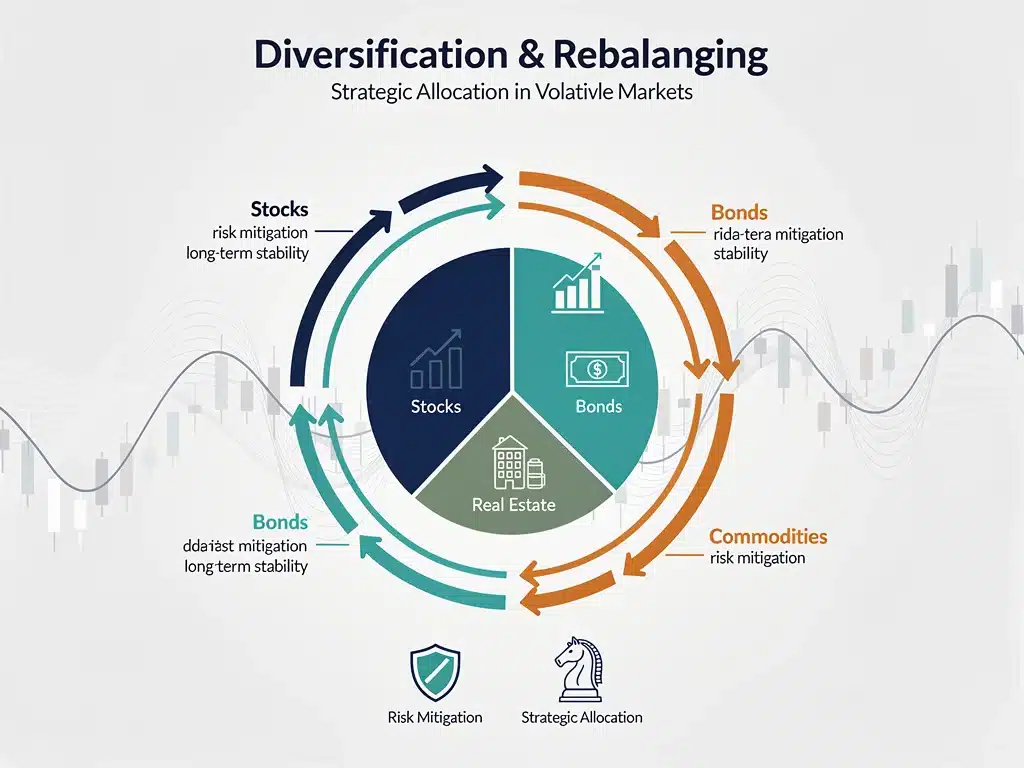
Diversification is a cornerstone of sound investment strategy, involving the spreading of investments across various asset classes, industries, and geographic regions. This approach aims to reduce overall portfolio risk by ensuring that poor performance in one area is offset by stronger performance in another.
For 2026 Wealth Management Strategies, effective diversification goes beyond simply holding different stocks and bonds. It requires a thoughtful allocation of assets that considers an investor’s risk tolerance, time horizon, and specific financial goals, all while accounting for current market conditions.
Strategic asset allocation, therefore, becomes a dynamic process, requiring regular review and rebalancing to maintain the desired risk-return profile. This proactive management is essential for building a resilient portfolio capable of weathering economic storms and achieving long-term objectives.
Rebalancing Your Portfolio Proactively
Portfolio rebalancing is the process of adjusting the weightings of a portfolio’s assets. This typically involves selling assets that have performed well and buying those that have underperformed, bringing the portfolio back to its original target allocation.
Regular rebalancing is crucial for maintaining the desired risk level and ensuring that the portfolio remains aligned with an investor’s long-term goals. Without it, a portfolio can drift, becoming overly concentrated in certain asset classes and potentially exposing it to higher, unintended risks.
Implementing a systematic rebalancing strategy, whether on a fixed schedule or based on specific market triggers, helps to lock in gains and buy low, which are fundamental principles of successful investing. This disciplined approach is vital for 2026 Wealth Management Strategies focused on resilience.
The Role of Alternative Investments
As traditional asset classes face increasing headwinds from volatility and inflation, alternative investments are gaining prominence in 2026 Wealth Management Strategies. These include assets like private equity, hedge funds, real estate, and commodities, which often exhibit lower correlation with conventional markets.
The inclusion of alternatives can provide diversification benefits, enhance returns, and offer a hedge against economic downturns or inflationary spikes. However, they typically come with higher liquidity risks and require a deeper understanding of their underlying mechanics.
Consulting with experienced financial advisors is crucial when considering alternative investments, as their complexity and unique risk profiles demand careful evaluation. Integrating them thoughtfully can significantly strengthen a portfolio’s ability to navigate future economic challenges.
Leveraging Technology in Wealth Management
Technological advancements are rapidly transforming the landscape of wealth management, offering sophisticated tools for analysis, planning, and execution. Robo-advisors, AI-driven insights, and advanced data analytics are becoming indispensable for modern 2026 Wealth Management Strategies.
These technologies can help investors gain deeper insights into market trends, optimize portfolio performance, and automate rebalancing processes. They also provide personalized financial planning solutions, making sophisticated strategies more accessible to a wider range of investors.
Embracing these technological tools allows for more efficient and data-driven decision-making, which is critical in a fast-paced and complex economic environment. The integration of technology can significantly enhance the effectiveness of wealth preservation and growth efforts.
Tax-Efficient Investing and Estate Planning
Effective 2026 Wealth Management Strategies extend beyond investment selection to include meticulous tax planning and comprehensive estate planning. Minimizing tax liabilities can significantly boost net returns, especially in volatile and inflationary periods.
Utilizing tax-advantaged accounts, understanding capital gains taxes, and strategically managing income are all critical components of a tax-efficient approach. Furthermore, a well-structured estate plan ensures that wealth is transferred according to an individual’s wishes, minimizing probate costs and taxes.
These aspects often require the expertise of financial advisors, tax professionals, and estate attorneys. Proactive planning in these areas ensures that wealth is preserved and transferred efficiently across generations, aligning with long-term financial objectives.
Strategic Use of Retirement Accounts
Retirement accounts such as 401(k)s and IRAs offer significant tax advantages that can be leveraged to maximize wealth accumulation. Contributions often grow tax-deferred or tax-free, depending on the account type, providing a powerful tool for long-term savings.
Understanding the contribution limits, withdrawal rules, and investment options within these accounts is essential for optimizing their benefits. For instance, Roth accounts can be particularly attractive in an inflationary environment, as qualified withdrawals are tax-free in retirement.
Integrating these accounts into an overall 2026 Wealth Management Strategies plan helps to not only save for retirement but also to manage tax exposure effectively throughout an individual’s earning and post-retirement years.
The Importance of Professional Guidance
Given the complexities of current economic conditions, professional guidance is more valuable than ever for implementing sound 2026 Wealth Management Strategies. Financial advisors bring expertise, experience, and an objective perspective to the table, helping clients navigate challenging markets.
They can assist in developing personalized financial plans, selecting appropriate investments, and ensuring that portfolios are aligned with individual goals and risk tolerances. A trusted advisor also provides crucial emotional support, helping clients avoid impulsive decisions during market downturns.
Choosing the right financial professional, whether a fee-only planner or a wealth management firm, is a critical decision. Their insights and ongoing support can significantly impact the success of wealth preservation and growth efforts in the years leading up to and including 2026.

| Key Strategy | Brief Description |
|---|---|
| Diversification | Spreading investments across assets to mitigate risk in volatile markets. |
| Inflation Hedges | Investing in assets like real estate or commodities to protect purchasing power. |
| Tax Efficiency | Utilizing tax-advantaged accounts and strategies to maximize net returns. |
| Professional Advice | Engaging financial advisors for tailored planning and objective market navigation. |
Frequently Asked Questions About 2026 Wealth Management Strategies
The main challenges for 2026 wealth management include persistent market volatility driven by geopolitical factors and interest rate changes, alongside ongoing inflationary pressures that erode asset purchasing power. Navigating these dual forces requires adaptive and resilient investment approaches to safeguard and grow wealth effectively.
Investors can protect assets from inflation by allocating to inflation-hedging assets such as real estate, commodities, and Treasury Inflation-Protected Securities (TIPS). Additionally, dividend-paying stocks from companies with strong pricing power can help maintain purchasing power. Diversification across these asset classes is crucial.
Diversification is vital because it spreads investments across various asset classes, industries, and geographies, reducing overall portfolio risk. In a volatile market, poor performance in one area can be offset by gains elsewhere, ensuring a more stable and resilient portfolio against unexpected economic shifts.
Technology offers advanced tools like robo-advisors, AI-driven analytics, and automated rebalancing for modern wealth management. These tools provide deeper market insights, optimize portfolio performance, and personalize financial planning, making sophisticated strategies more accessible and efficient for investors navigating complex economic landscapes.
Seeking professional financial advice is recommended when navigating complex market conditions, planning for retirement, or managing significant life events. An advisor provides personalized plans, objective perspectives, and helps align investments with long-term goals, crucial for effective 2026 Wealth Management Strategies and beyond.
Looking Ahead: Ensuring Financial Stability
The economic outlook for 2026 demands a proactive and informed approach to wealth management. The combination of persistent market volatility and inflationary pressures means that traditional strategies may no longer be sufficient. Investors must prioritize diversification, consider inflation-hedging assets, and leverage technological tools to optimize their portfolios.
Furthermore, tax-efficient investing and comprehensive estate planning are indispensable components of a robust financial strategy. Engaging with qualified financial professionals provides the necessary expertise and guidance to navigate these complexities, ensuring that assets are not only protected but also positioned for sustainable growth.
By adopting these forward-thinking 2026 Wealth Management Strategies, individuals and families can build resilient portfolios capable of withstanding economic challenges and achieving their long-term financial aspirations. The journey to financial stability in the coming years will be defined by strategic planning and adaptive execution.