Competency-Based Higher Education: Cut Degree Time by 40%
Anúncios
Traditional credit hours often force students to spend months sitting through material they have already mastered in the workforce. Modern Competency-Based Higher Education solves this inefficiency by letting students demonstrate mastery immediately and advance as soon as they prove subject proficiency.
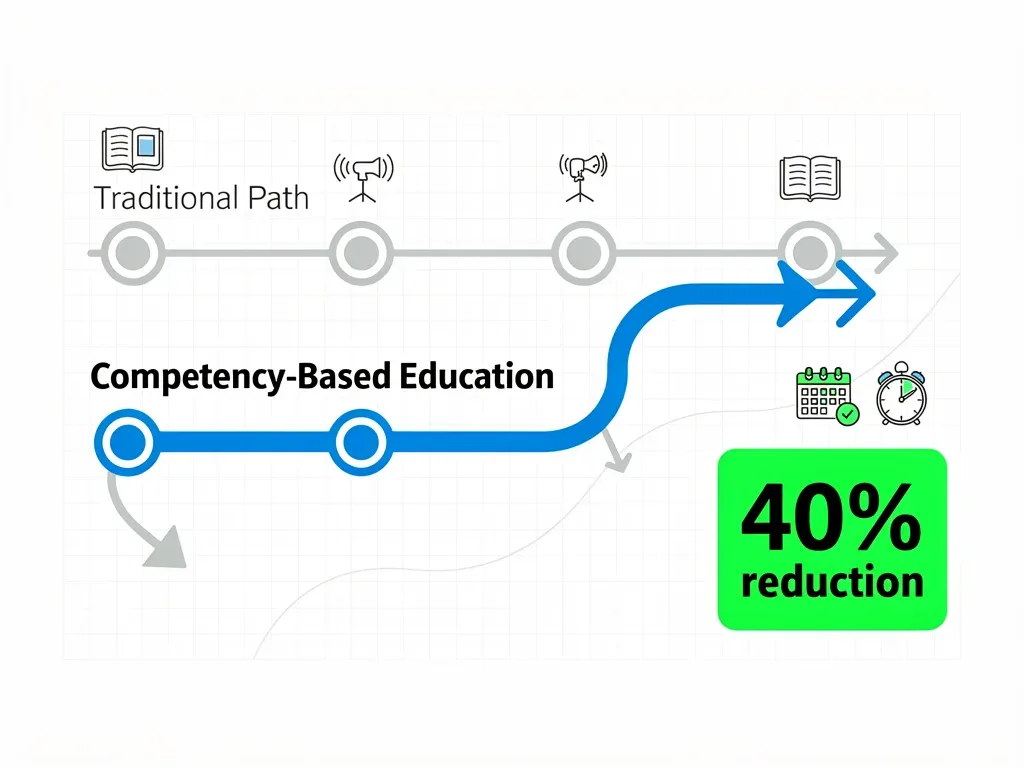
By replacing fixed semester schedules with self-paced skill evaluations, non-traditional learners can accelerate course completion and cut overall degree timelines by up to 40%. Passing rigorous performance assessments allows adult students and working professionals to bypass redundant coursework and reduce total tuition expenses significantly.
Shifting the focus from seat-time requirements to verified skill mastery is revolutionizing higher education accessibility nationwide. Here is how mastery-based degree programs operate and how you can leverage prior experience to fast-track your university diploma.
Understanding Competency-Based Higher Education Fundamentals
Competency-based higher education, often abbreviated as CBE, is an instructional approach that focuses on what students know and can do, rather than on time spent in a classroom. Learners advance upon demonstrating mastery of specific competencies, regardless of how long it takes them to acquire that knowledge.
This model stands in stark contrast to traditional credit-hour systems, which often tie progress to seat time and fixed schedules. By prioritizing outcomes over inputs, CBE offers a fundamentally different pathway to earning a degree.
Anúncios
The core principle is that learning is not linear or uniform; individuals learn at different speeds and possess varied backgrounds. CBE acknowledges this diversity, providing a personalized and efficient route to academic achievement.
Defining Competency and Mastery
In competency-based higher education, a 'competency' refers to a measurable skill, knowledge, or ability that a student must demonstrate. These are typically defined by faculty and industry experts, ensuring relevance to real-world demands.
Mastery means consistently performing a competency at a predetermined level of proficiency. This often involves a variety of assessments, including projects, portfolios, simulations, and exams, moving beyond rote memorization.
The emphasis on demonstrable skills ensures that graduates are well-prepared for their chosen careers. This direct alignment with workforce needs is a key driver behind the growing interest in competency-based higher education.
Clear Learning Outcomes: Competencies are explicitly stated, providing a transparent roadmap for students.
Flexible Pacing: Students can accelerate through familiar material or take more time on challenging concepts.
Diverse Assessment Methods: Evaluation goes beyond traditional tests, focusing on practical application.
The rigorous definition of competencies and mastery ensures that academic standards are maintained, even as the learning process becomes more individualized. This structured flexibility is central to its appeal.
The Promise of Accelerated Degree Completion
One of the most compelling aspects of competency-based higher education is its potential to significantly reduce the time it takes to earn a degree. Studies and institutional data consistently show that students can cut their degree completion time by up to 40%.
This acceleration is largely due to the self-paced nature of CBE programs. Students who already possess knowledge or skills from prior work experience, military service, or informal learning can test out of competencies they have already mastered.
Anúncios
Instead of spending time in lectures covering familiar ground, they can focus their efforts on new material. This efficiency translates directly into faster degree attainment, offering considerable advantages for learners.
How Self-Pacing Drives Efficiency
Self-pacing is the cornerstone of accelerated degree completion in CBE. It empowers students to take ownership of their learning journey, moving as quickly or as slowly as their individual needs dictate.
For highly motivated students or those with relevant prior learning, this means bypassing unnecessary coursework. They can demonstrate mastery of competencies swiftly, progressing through their program at an expedited rate.
Conversely, students who require more time on certain subjects can dedicate extra effort without falling behind a cohort. This adaptive flexibility makes competency-based higher education accessible and effective for a broader range of learners.

This personalized approach not only saves time but also often reduces overall educational costs, as fewer terms or semesters are required. The financial implications are a significant draw for many prospective students.
Impact on Student Outcomes and Employability
Beyond faster degree completion, competency-based higher education aims to enhance student outcomes and improve employability. By focusing on practical, job-relevant skills, CBE programs are designed to produce graduates who are immediately valuable in the workforce.
Employers increasingly seek candidates with demonstrable skills, not just degrees. CBE directly addresses this need by ensuring that every graduate has proven proficiency in a defined set of competencies directly applicable to their chosen field.
This alignment between curriculum and industry demands strengthens the value proposition of a CBE degree. It helps bridge the gap between academic learning and professional readiness, a challenge many traditional programs face.
Bridging the Skills Gap with CBE
The skills gap is a persistent issue in many industries, where employers struggle to find candidates with the necessary proficiencies. Competency-based higher education is uniquely positioned to help close this gap.
By collaborating with industry leaders to define competencies, CBE programs ensure that the curriculum is always current and relevant. This direct feedback loop means that what students learn directly translates to what employers need.
Graduates of CBE programs can often articulate their skills more clearly, as they have specifically demonstrated mastery in each area. This confidence and clarity are invaluable during job interviews and career progression.
Direct Skill Alignment: Curricula developed in partnership with industry ensure relevant skills.
Portfolio Development: Students often build portfolios showcasing their mastered competencies.
Career Readiness: Graduates are better prepared to immediately contribute in professional roles.
The emphasis on practical application and demonstrated mastery equips students with a strong foundation for career success. This makes competency-based higher education an attractive option for career-focused individuals.
Challenges and Considerations in CBE Implementation
While the benefits of competency-based higher education are clear, its widespread implementation also presents several challenges. These include issues related to faculty development, accreditation, and ensuring equitable access for all students.
Transitioning from a traditional model to CBE requires significant institutional change, including rethinking curriculum design, assessment methods, and faculty roles. This transformation is not always straightforward and can be resource-intensive.
Furthermore, questions of accreditation and financial aid eligibility for CBE programs have historically posed hurdles, though these are increasingly being addressed by regulatory bodies. Ensuring quality and consistency across diverse programs remains a priority.
Ensuring Quality and Equity in CBE
Maintaining academic rigor and ensuring the quality of learning outcomes is paramount in CBE. Institutions must develop robust assessment strategies that accurately measure mastery and prevent superficial progress.
Equity is another critical consideration. While CBE offers flexibility, institutions must ensure that all students, regardless of their background or prior experience, receive the support needed to succeed. This includes access to effective learning resources and faculty mentorship.
Addressing these challenges requires ongoing collaboration among educators, policymakers, and accrediting agencies. The goal is to maximize the benefits of competency-based higher education while mitigating potential pitfalls.
Technological Integration and Future Trends
Technology plays a pivotal role in the success and scalability of competency-based higher education. Learning management systems, adaptive learning platforms, and sophisticated assessment tools are essential for managing individualized learning paths and tracking student progress.
These technologies enable personalized feedback, allow students to access resources on demand, and facilitate efficient assessment of competencies. The digital infrastructure supports the flexible and data-driven nature of CBE programs.
As technology continues to advance, so too will the capabilities of CBE. Artificial intelligence and machine learning, for instance, hold the promise of even more tailored learning experiences and predictive analytics to support student success.
The Role of Data Analytics in CBE
Data analytics is becoming increasingly important in competency-based higher education. By collecting and analyzing data on student performance, institutions can gain insights into learning patterns, identify areas where students struggle, and refine their programs.
This data-driven approach allows for continuous improvement of curriculum and instructional strategies. It helps ensure that CBE programs are not only efficient but also highly effective in fostering deep learning and mastery.
Moreover, analytics can help identify students who may be at risk of falling behind, enabling timely interventions and support. This proactive approach is a hallmark of well-implemented competency-based higher education.
Personalized Learning Paths: Technology helps tailor content and assessments to individual student needs.
Efficient Progress Tracking: Digital platforms monitor mastery and accelerate advancement.
Enhanced Accessibility: Online CBE programs expand access to education for diverse populations.
The synergy between technology and CBE is expected to drive further innovation, making higher education more accessible, efficient, and responsive to the needs of learners and the economy.
Accreditation and Policy Landscape for CBE
The regulatory landscape for competency-based higher education has been evolving significantly in recent years. Accrediting bodies and federal agencies have increasingly recognized the validity and potential of CBE, leading to clearer guidelines and greater acceptance.
Historically, the fixed credit-hour model presented challenges for CBE programs seeking accreditation and federal financial aid eligibility. However, policy adjustments are making it easier for institutions to offer these innovative programs.
These policy changes are crucial for the continued growth and mainstream adoption of CBE. They provide a framework that ensures quality while allowing for the flexibility inherent in the competency-based model.
Recent Policy Developments
Recent policy developments, such as updated guidance from the U.S. Department of Education, have clarified how federal financial aid can be applied to CBE programs. This has removed a significant barrier for many institutions considering this model.
Accrediting agencies are also developing more tailored standards for evaluating CBE programs, moving away from a one-size-fits-all approach. This reflects a growing understanding of the unique pedagogical and administrative aspects of competency-based higher education.
These ongoing adjustments signal a positive trend towards greater integration of CBE into the broader higher education system. They are essential for fostering innovation while maintaining accountability and student protections.
The Student Experience in a CBE Program
For students, enrolling in a competency-based higher education program offers a distinct experience compared to traditional pathways. It emphasizes autonomy, focused learning, and a direct connection between effort and progress.
Students often report feeling more engaged and motivated, as they can clearly see the relevance of what they are learning to their career goals. The ability to control their pace and focus on areas where they need improvement is highly valued.
This personalized journey can lead to a deeper understanding of subjects and a stronger sense of accomplishment. The student experience is central to the success and appeal of competency-based higher education.
Support Systems for CBE Learners
While CBE promotes independence, robust support systems are crucial for student success. These often include dedicated academic advisors, faculty mentors, and access to a wide range of learning resources.
Effective CBE programs provide continuous feedback and opportunities for students to refine their understanding before demonstrating mastery. This iterative process is designed to ensure no student is left behind.
Peer learning communities and online forums also play a role in fostering a supportive environment, allowing students to connect and collaborate. Comprehensive support is key to maximizing the benefits of this flexible model.
Future Outlook for Competency-Based Higher Education
The future of competency-based higher education appears promising, with increasing interest from students, institutions, and employers. As the demand for flexible, affordable, and career-aligned education grows, CBE is well-positioned to meet these needs.
Further innovations in technology, coupled with evolving policy frameworks, are expected to expand the reach and sophistication of CBE programs. This could lead to more diverse offerings and greater customization for learners.
The focus on demonstrable skills and efficient degree completion aligns perfectly with the evolving demands of the 21st-century workforce. CBE is poised to become an increasingly integral part of the higher education landscape.
Continued research into student outcomes, program effectiveness, and best practices will further refine the model. The goal is to ensure that CBE consistently delivers on its promise of high-quality, accelerated education.
Key Aspect | Description |
|---|---|
Definition | Education focused on demonstrated mastery of skills, not seat time. |
Time Reduction | Students can cut degree completion time by up to 40% through self-pacing. |
Employability | Enhances career readiness by aligning skills directly with workforce needs. |
Challenges | Implementation requires faculty development, accreditation adjustments, and equity focus. |
Frequently Asked Questions About Competency-Based Higher Education
What exactly is competency-based higher education?▼
Competency-based higher education (CBE) is an educational approach where students advance by demonstrating mastery of specific skills and knowledge, rather than by completing a set number of credit hours or spending a fixed amount of time in class. It focuses on measurable learning outcomes.
How can CBE cut degree time by 40%?▼
The significant time reduction in competency-based higher education stems from its self-paced nature. Students with prior knowledge or relevant experience can demonstrate mastery of competencies more quickly, thus accelerating their progress through the curriculum and reducing overall time to degree completion.
Is competency-based higher education recognized by employers?▼
Yes, competency-based higher education is increasingly recognized and valued by employers. Its focus on demonstrable skills directly aligns with workforce needs, ensuring graduates possess the practical abilities required for their chosen careers. Many CBE programs are developed with industry input.
What are the main benefits for students in CBE programs?▼
Students in competency-based higher education benefit from flexible pacing, which allows them to learn at their own speed. They can save time and money, gain job-relevant skills, and receive personalized support. This model is particularly beneficial for adult learners and those balancing work or family commitments.
Are CBE programs accredited like traditional degrees?▼
Yes, many competency-based higher education programs are fully accredited by recognized agencies, just like traditional degree programs. The accreditation process ensures that CBE programs meet rigorous academic standards, providing quality assurance for students and employers. Always verify a program's accreditation status.
Impact and Implications
The rise of competency-based higher education marks a pivotal shift in how degrees are earned, offering a compelling alternative to traditional models. Its proven ability to significantly reduce degree completion time addresses critical needs for affordability and efficiency in education. As institutions continue to adapt and policymakers refine regulations, CBE is set to become a cornerstone of future learning landscapes. Watch for continued innovation in assessment and technology, further solidifying its role in preparing a skilled and adaptable workforce for tomorrow's challenges.