Direct Admissions Expansion 2026: 120 Colleges Eliminate Traditional Application
Anúncios
The rapid nationwide roll-out of Direct Admissions Expansion is fundamentally reshaping how high school seniors transition into higher education. By bypassing cumbersome paperwork, over 120 institutions are proactively extending acceptance offers to qualified students based directly on academic transcripts.
This non-traditional enrollment model eliminates application fees and reduces admission anxiety for thousands of prospective undergraduates. By streamlining the enrollment funnel, participating universities aim to boost college attendance rates and widen access for underrepresented demographics.
Rethinking standard university entry is setting a new benchmark for higher education access. Here is a closer look at how proactive acceptance programs operate, which schools are participating, and what this shift means for future applicants.
Understanding the Direct Admissions Model
The direct admissions model operates on a fundamentally different premise than traditional applications. Instead of students applying to colleges, colleges identify and offer admission to students who meet predetermined academic criteria, often based on high school transcripts and standardized test scores, if available.
This approach significantly reduces the administrative burden on both students and institutions. It also aims to reach students who might not otherwise consider applying to certain institutions due to perceived barriers or lack of guidance, thereby broadening the applicant pool.
Anúncios
The core idea behind this model is to recognize academic achievement early and reward it with clear pathways to higher education. This proactive engagement is expected to foster a more inclusive and less stressful transition from high school to college, especially for those from underrepresented backgrounds.
How Direct Admissions Works in Practice
Direct admissions typically involves colleges collaborating with high schools and state education departments to access student data. Based on specific criteria like GPA, course rigor, and sometimes state-level assessments, colleges extend admission offers directly to qualified students.
Students then have the option to accept these offers, often with a simplified enrollment process. This system bypasses the need for essays, recommendation letters, and application fees that are hallmarks of the traditional application, making college access more equitable.
Identification of eligible students through academic records.
Proactive extension of admission offers by participating colleges.
Simplified acceptance and enrollment process for students.
Reduction of traditional application barriers like essays and fees.
The Driving Forces Behind the 2026 Expansion
Several factors have converged to propel the Direct Admissions Expansion in 2026. A primary driver is the persistent concern over equity and access in higher education, especially for first-generation and low-income students who often navigate the application process with limited support.
The pandemic further highlighted the vulnerabilities of the traditional system, with many institutions temporarily waiving standardized test requirements and observing the benefits of a more flexible approach. This experience provided a crucial blueprint for exploring alternative admissions pathways.
Furthermore, colleges are increasingly seeking ways to diversify their student bodies and ensure that talented individuals from all backgrounds have the opportunity to pursue higher education. Direct admissions is seen as a powerful tool to achieve these diversity and inclusion goals, attracting students who might not have considered applying through traditional channels.
Addressing Equity and Access Challenges
The traditional college application process has long been criticized for favoring students with access to extensive resources, such as college counselors, test prep courses, and essay coaches. This creates an uneven playing field, disadvantaging students from less privileged backgrounds.
Anúncios
Direct admissions aims to level this playing field by removing many of these structural barriers. By making admission offers unconditional upon meeting academic thresholds, it empowers students to see themselves as college-bound, regardless of their access to application support.
This focus on equity extends beyond individual students; it seeks to address systemic inequalities in educational attainment. The expansion is a direct response to calls for a more just and inclusive higher education system, ensuring that merit is recognized regardless of socioeconomic status.
Impact on Students: A Simplified Path to Higher Education
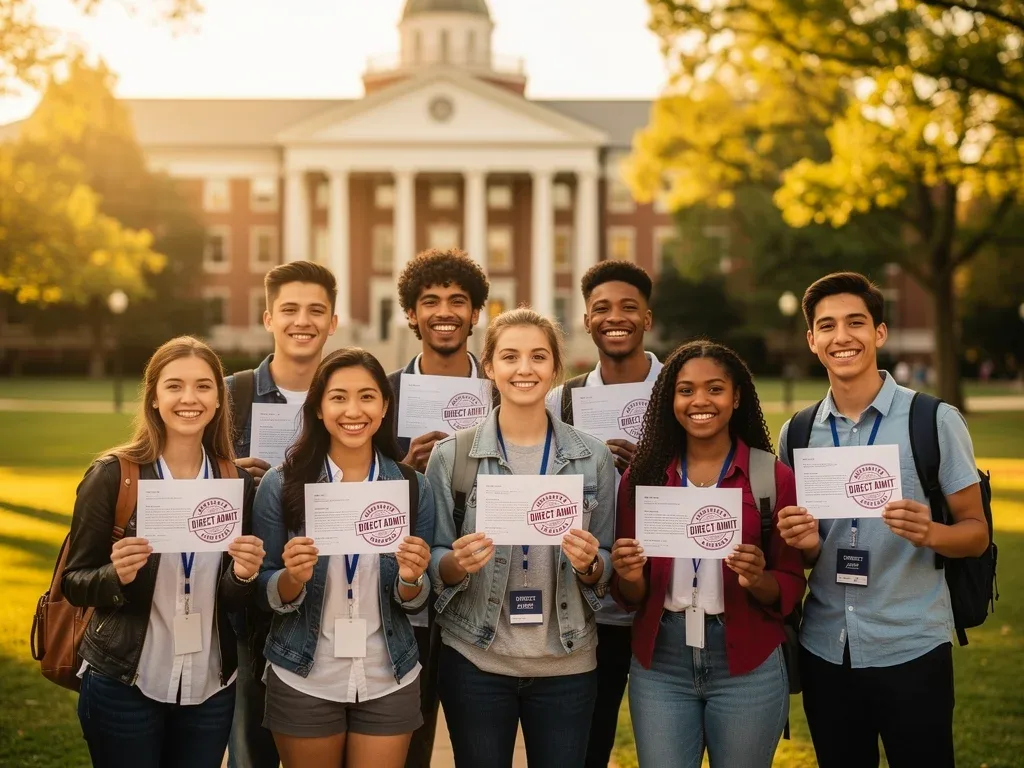
For students, the Direct Admissions Expansion in 2026 represents a significant reduction in stress and uncertainty. Receiving an unsolicited admission offer can be incredibly validating and empowering, particularly for those who might doubt their college readiness or eligibility.
This streamlined process allows students to focus more on their academic performance and personal growth during their senior year of high school. It frees up time and resources that would otherwise be spent on navigating complex application platforms and crafting numerous essays.
Moreover, direct admissions can open doors to institutions that students might not have previously considered. By receiving offers from a broader range of colleges, students gain more options and can make more informed decisions about their post-secondary education, potentially discovering new academic and personal fits.
Benefits for Underserved Populations
The most profound impact of direct admissions is expected to be on underserved student populations. These include first-generation college students, low-income students, and those from rural or underresourced urban areas, who often face significant hurdles in the traditional application process.
By removing the psychological and financial barriers associated with applying, direct admissions can significantly increase college enrollment rates among these groups. It provides a clear, unambiguous pathway to higher education, transforming aspirations into tangible opportunities.
This targeted approach ensures that talent is not overlooked due to a lack of familiarity with the application system or financial constraints. It underscores a commitment to fostering a more representative and diverse student body across participating institutions.
Implications for Participating Colleges and Universities
The Direct Admissions Expansion in 2026 also carries substantial implications for the institutions involved. While it simplifies the recruitment process in some ways, it also necessitates adjustments to traditional enrollment management strategies.
Colleges will need to refine their criteria for direct admission offers and develop robust communication channels with high schools and prospective students. This proactive recruitment requires a shift in mindset from evaluating applications to actively identifying and engaging with eligible students.
Furthermore, institutions will need to consider how direct admissions impacts their yield rates and overall institutional selectivity. While the goal is to increase access, maintaining a desired academic profile and managing enrollment numbers will remain critical challenges, requiring careful planning and execution.
Rethinking Enrollment Management Strategies
For many colleges, direct admissions means a significant overhaul of their enrollment management offices. The focus will shift from processing applications to identifying and nurturing relationships with high schools and students from an earlier stage.
This new approach requires advanced data analytics to pinpoint eligible students and personalized outreach to encourage them to accept offers. It’s a move towards a more proactive, rather than reactive, recruitment model, demanding different skill sets and technological infrastructure.
The success of direct admissions will depend heavily on institutions' ability to adapt their marketing and communication strategies. They must effectively convey the value of their direct admission offers and differentiate themselves in a new, streamlined admissions landscape.
Potential Challenges and Criticisms of Direct Admissions
While the Direct Admissions Expansion in 2026 is largely lauded for its potential benefits, it is not without its challenges and criticisms. Concerns have been raised regarding the potential for students to miss out on institutions that might be a better fit but do not participate in direct admissions.
There are also questions about whether relying solely on academic metrics might overlook other important qualities in a student, such as leadership, extracurricular involvement, or unique life experiences, which are often highlighted in essays and recommendation letters.
Moreover, the implementation of such a large-scale program requires significant coordination between colleges, high schools, and state education systems. Data sharing, privacy concerns, and ensuring equitable access to information across all high schools present complex logistical hurdles that need careful navigation.
Ensuring Holistic Review and Student Fit
A key criticism of direct admissions is the potential for it to undermine the concept of holistic review. Many institutions pride themselves on evaluating applicants based on a wide range of factors beyond just grades and test scores, believing this leads to a more well-rounded student body.
While direct admissions simplifies the process, some argue it might reduce the opportunity for students to showcase their unique talents and personal narratives. Colleges must find ways to balance efficiency with the desire to admit students who are not only academically capable but also a strong cultural and intellectual fit for their campus community.
Risk of overlooking non-academic strengths and experiences.
Challenges in ensuring perfect student-institution fit without essays.
Data privacy concerns regarding student academic records.
Potential for reduced institutional selectivity for highly competitive programs.
The Future Landscape of College Admissions Post-2026
The Direct Admissions Expansion in 2026 is poised to fundamentally alter the competitive dynamics of college admissions. With a significant number of institutions adopting this model, it will likely influence how other colleges, even those not participating, approach their recruitment strategies.
We can anticipate a hybrid model emerging, where some colleges continue with traditional applications, others embrace direct admissions fully, and many adopt a combination of both. This evolving landscape will demand greater flexibility and adaptability from both students and institutions.
The long-term success of this initiative will be measured not only by increased enrollment numbers but also by improvements in student retention, academic outcomes, and overall student satisfaction. It represents a bold experiment with the potential to redefine what college access truly means in the 21st century.

Adapting to a Hybrid Admissions Environment
As the 2026 deadline approaches, colleges will need to strategically position themselves within this new hybrid environment. Institutions maintaining traditional applications may need to emphasize the unique aspects of their holistic review process to attract a diverse pool of applicants.
Those embracing direct admissions will focus on refining their targeting algorithms and enhancing their outreach programs to ensure they are reaching the most promising students. The competition for students will likely intensify, but on different fronts than before.
Students, in turn, will need to be savvier about understanding the various admission pathways available to them. Guidance counselors will play an even more critical role in helping students navigate these diverse options and make informed decisions about their post-secondary education journey.
Success Stories and Early Indicators
While the full Direct Admissions Expansion in 2026 is still on the horizon, pilot programs and early adopters have already provided encouraging indicators. Institutions that have experimented with direct admissions report positive outcomes, particularly in terms of increasing diversity and access.
These early successes demonstrate the viability of the model and its potential to address some of the most pressing challenges in higher education. They also offer valuable lessons for the 120 colleges preparing for the 2026 rollout, providing insights into best practices and potential pitfalls.
Data from these pilot programs often highlight increased application rates from underrepresented minority groups and a higher percentage of accepted students choosing to enroll. This suggests that removing application barriers genuinely empowers students to pursue higher education opportunities they might otherwise miss.
Lessons from Pilot Programs
Pilot programs have shown that clear communication is paramount. Students and high school counselors need to fully understand how direct admissions works, what criteria are used, and what steps are required to accept an offer. Transparency builds trust and encourages participation.
Another key lesson is the importance of robust technological infrastructure. Efficient data sharing between high schools and colleges is essential for identifying eligible students and extending offers in a timely manner. Investing in secure and seamless data systems is crucial for scalability.
Increased enrollment rates for underrepresented students.
Positive student feedback regarding reduced stress.
Improved efficiency in college recruitment processes.
Challenges in data integration and communication with high schools.
The Role of Technology in Direct Admissions
Technology is an indispensable enabler of the Direct Admissions Expansion in 2026. Sophisticated data analytics platforms and secure data exchange systems are at the core of this admissions revolution, allowing colleges to identify and connect with eligible students efficiently.
These technological tools enable institutions to process vast amounts of academic data from high schools, apply their specific admission criteria, and generate personalized offers. Without advanced digital infrastructure, the scale and scope of this initiative would be impractical.
Furthermore, technology facilitates the communication flow between colleges, high schools, and students, ensuring that offers are delivered promptly and students have easy access to information and resources. This digital backbone is crucial for the smooth operation and success of the direct admissions model.
Data Analytics and Student Identification
Advanced data analytics play a pivotal role in identifying students who meet direct admission criteria. Algorithms can analyze high school transcripts, course loads, and other academic indicators to flag eligible candidates, often before they even consider applying to college.
This predictive capability allows colleges to be proactive in their recruitment efforts, reaching out to students who align with their institutional mission and academic profile. It transforms a reactive application review into a strategic, data-driven outreach campaign.
The use of data also helps in ensuring fairness and consistency in the direct admission process. By applying objective academic criteria, institutions can minimize subjective biases that might inadvertently creep into traditional application reviews, promoting a more equitable system.
Key Point | Brief Description |
|---|---|
Admissions Shift | 120 colleges eliminate traditional applications for direct offers. |
Equity Focus | Aims to increase access for underserved student populations. |
Student Impact | Reduces stress, simplifies process, broadens college options. |
Institutional Changes | Requires new enrollment management and recruitment strategies. |
Frequently Asked Questions About Direct Admissions Expansion
What exactly is Direct Admissions Expansion in 2026: Why 120 Colleges Are Eliminating the Traditional Application Process?▼
It's an initiative where 120 U.S. colleges will proactively offer admission to eligible students based on their academic records, rather than requiring them to submit a traditional application. This aims to simplify college entry and increase access for diverse students.
Why are 120 colleges eliminating the traditional application process?▼
Colleges are seeking to enhance equity, simplify the admissions process, and diversify their student bodies. The traditional application can be a barrier for many, especially first-generation and low-income students, making direct admissions a more inclusive approach.
How will students know if they are eligible for direct admissions?▼
Participating colleges will typically use academic data from high schools, such as GPA and course rigor, to identify and notify eligible students directly. This usually involves proactive communication from the institutions to prospective students.
What are the main benefits of this direct admissions expansion for students?▼
Benefits include reduced stress, elimination of application fees, and a clearer pathway to college. Students receive early, unconditional offers, which can broaden their options and encourage them to pursue higher education without traditional application hurdles.
What challenges might arise with the Direct Admissions Expansion in 2026?▼
Potential challenges include ensuring equitable data sharing, maintaining holistic review aspects, and managing institutional selectivity. Colleges must adapt their enrollment strategies, and students need clear guidance to navigate the new system effectively.
Perspectives
The Direct Admissions Expansion in 2026 marks a transformative moment for higher education. This initiative signals a clear shift towards prioritizing access and equity, challenging long-held assumptions about college entry.
As implementation unfolds, it will be crucial to monitor how institutions adapt their strategies and how students respond to these new opportunities. The success of this bold experiment could set a new standard for admissions nationwide, influencing future policy and practice in profound ways.
This development is not just about streamlining a process; it's about reimagining the very gateway to higher learning.