DOE Finalizes $1,200 Rebate for Residential Clean Power
Anúncios
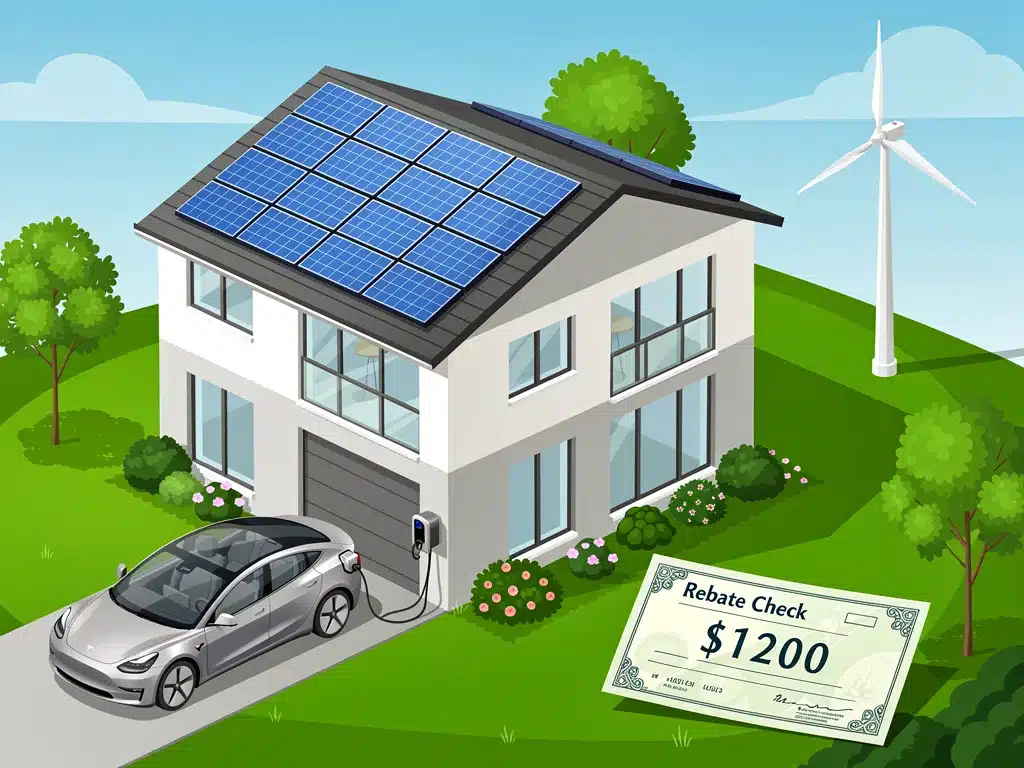
The Department of Energy has finalized a $1,200 consumer rebate program for residential clean power adoption.
This federal initiative provides financial relief to help homeowners cover upfront costs for renewable energy systems while supporting national climate goals. Here is what you need to know about eligibility and how the program works.
Department of Energy Finalizes $1,200 Consumer Rebate Program for Residential Clean Power Adoption: Key Details
The Department of Energy (DOE) officially announced the finalization of its highly anticipated $1,200 consumer rebate program, designed to boost residential clean power adoption across the nation.
Anúncios
This program represents a concrete step towards making renewable energy more accessible and affordable for American households.
The initiative is part of a broader federal strategy to reduce carbon emissions and strengthen energy independence, aligning with long-term environmental sustainability objectives.
Homeowners now have a tangible financial incentive to explore and implement clean energy technologies.
Anúncios
This finalized program underscores the government’s commitment to fostering a green economy and empowering individuals to play an active role in the energy transition.
The $1,200 rebate is expected to stimulate significant interest and investment in residential solar, wind, and other clean power systems.
Eligibility Criteria for the $1,200 Rebate
To qualify for the $1,200 rebate under the Department of Energy Finalizes $1,200 Consumer Rebate Program for Residential Clean Power Adoption, homeowners must meet specific criteria established by the DOE.
These criteria are designed to ensure the program’s effectiveness and reach its intended beneficiaries.
Applicants will need to demonstrate ownership of their primary residence and confirm that the clean energy installation meets defined technical standards.
The program prioritizes installations that are new and contribute to a measurable reduction in the home’s carbon footprint.
- Home must be a primary residence.
- Clean power system must be newly installed.
- Installation must comply with DOE technical specifications.
- Proof of purchase and installation by a certified professional is required.
The DOE has emphasized that the application process will be streamlined to encourage participation, with clear guidelines provided to assist homeowners in navigating the requirements.
This clarity is crucial for maximizing the program’s impact and ensuring widespread adoption.
Application Process and Timeline for Clean Power Rebates
Understanding the application process is paramount for homeowners looking to benefit from the Department of Energy Finalizes $1,200 Consumer Rebate Program for Residential Clean Power Adoption.
The DOE has outlined a straightforward, multi-step process to facilitate smooth submissions.
Homeowners will typically need to submit their application online through a dedicated portal, providing necessary documentation such as proof of residency, installation invoices, and system specifications.
Early submission is encouraged due to potential high demand.
The timeline for receiving the rebate after approval is projected to be within a few weeks, though this may vary based on the volume of applications.
The DOE aims for efficient processing to ensure timely financial support for participating households.
Required Documentation for Rebate Claims
Successful rebate applications hinge on providing accurate and complete documentation.
The Department of Energy Finalizes $1,200 Consumer Rebate Program for Residential Clean Power Adoption requires several key documents to verify eligibility and installation details.
Applicants should prepare copies of their property deed or lease agreement, detailed invoices from certified installers, and product specifications for the clean energy system.
Photos of the completed installation may also be requested as part of the verification process.
- Proof of homeownership or long-term lease.
- Itemized invoice from a certified clean energy installer.
- Manufacturer specifications for installed equipment.
- Completed application form with all required fields.
The DOE’s official website provides a comprehensive checklist of all necessary documents, advising applicants to gather these materials before initiating the online submission. This proactive approach can significantly reduce processing delays.
Impact on Homeowners and the Clean Energy Market
The finalization of the $1,200 consumer rebate program by the Department of Energy is expected to have a dual impact: significantly benefiting homeowners and stimulating growth within the clean energy market.
This financial incentive makes clean power more attractive to a broader demographic.
For homeowners, the rebate directly reduces the financial burden of adopting renewable energy technologies, accelerating the return on investment for systems like solar panels or small wind turbines.
This makes sustainable living more attainable for many families.
From a market perspective, the program is poised to create increased demand for clean energy products and services, fostering innovation and job creation within the sector.
This aligns with national goals of promoting a robust green economy.
Financial Benefits Beyond the Initial Rebate
While the $1,200 rebate is a direct financial boost, homeowners adopting clean power solutions often realize additional long-term economic advantages.
These benefits extend beyond the initial incentive provided by the Department of Energy Finalizes $1,200 Consumer Rebate Program for Residential Clean Power Adoption.
Reduced monthly utility bills are a primary benefit, as homeowners generate their own electricity, lessening reliance on traditional energy grids. This can lead to substantial savings over the lifespan of the clean energy system.
- Lower electricity bills and long-term energy savings.
- Increased property value due to energy-efficient upgrades.
- Potential eligibility for additional state or local incentives.
- Reduced carbon footprint and environmental benefits.
Furthermore, many states and local municipalities offer complementary tax credits or incentives for clean energy installations, which, when combined with the federal rebate, can dramatically improve the overall financial viability of these projects.
Broader Implications for National Energy Policy
The Department of Energy Finalizes $1,200 Consumer Rebate Program for Residential Clean Power Adoption is not merely a financial incentive; it is a significant policy statement.
This move reinforces the federal government’s commitment to accelerating the nation’s transition to a clean energy economy.
This program is anticipated to serve as a catalyst for greater public engagement with renewable energy, encouraging more households to consider sustainable alternatives.
It aligns with broader national objectives of climate resilience and energy security.
By directly supporting residential clean power, the DOE is fostering a decentralized energy system, which can enhance grid stability and reduce vulnerability to traditional energy supply fluctuations.
This strategic shift has profound implications for future energy infrastructure.
Addressing Energy Equity and Accessibility
A key aspect of the Department of Energy Finalizes $1,200 Consumer Rebate Program for Residential Clean Power Adoption is its potential to improve energy equity and accessibility.
The program aims to ensure that the benefits of clean energy are not limited to affluent households.
By providing a direct financial rebate, the DOE is lowering a significant barrier to entry for many middle-income families, making clean power installations more affordable. This helps democratize access to sustainable energy solutions.
- Reduces upfront costs, making clean energy more accessible.
- Promotes economic development in underserved communities.
- Supports a more inclusive transition to renewable energy.
- Aims to mitigate energy poverty by reducing household expenses.
The program’s design includes provisions to ensure outreach to diverse communities, striving for equitable distribution of these clean energy benefits across all demographics. This inclusive approach is crucial for a just energy transition.
Future Outlook for Residential Clean Power
With the Department of Energy Finalizes $1,200 Consumer Rebate Program for Residential Clean Power Adoption, the outlook for residential clean power in the U.S. appears increasingly optimistic.
This initiative is expected to drive further innovation and adoption in the coming years.
Experts predict a surge in demand for residential solar, wind, and battery storage solutions, leading to advancements in technology and reductions in installation costs.
This positive feedback loop will make clean power even more attractive.
The program also signals a sustained federal commitment to renewable energy, which could encourage private sector investment and foster a more robust clean energy ecosystem.
This long-term vision is critical for achieving ambitious climate targets.
Complementary Policies and Programs
The $1,200 rebate program is part of a larger tapestry of federal and state initiatives designed to support clean energy.
Homeowners should be aware of these complementary policies that can further enhance the benefits of residential clean power adoption.
These include federal tax credits, such as the Investment Tax Credit (ITC) for solar and wind, which can provide significant additional savings.
Many states also offer their own rebate programs, property tax exemptions, or low-interest loans for energy-efficient upgrades.
- Federal Investment Tax Credit (ITC) for renewable energy.
- State-specific clean energy rebate programs and incentives.
- Local property tax exemptions for solar or energy-efficient homes.
- Net metering policies allowing homeowners to sell excess energy back to the grid.
By leveraging these combined programs, homeowners can maximize their financial returns and accelerate their transition to a fully sustainable energy model. Staying informed about all available incentives is key to optimizing these investments.
Challenges and Considerations for Program Implementation
While the Department of Energy Finalizes $1,200 Consumer Rebate Program for Residential Clean Power Adoption presents immense opportunities, its successful implementation will also face certain challenges.
Addressing these proactively is crucial for the program’s long-term efficacy.
Ensuring widespread awareness and understanding of the program among all eligible homeowners will be vital.
The DOE must implement robust communication strategies to reach diverse populations and inform them about the available benefits.
Managing the expected surge in applications and maintaining efficient processing times will also be a key operational challenge.
Adequate staffing and technological infrastructure will be necessary to prevent backlogs and ensure timely disbursement of funds.
Ensuring Quality and Consumer Protection
As the demand for residential clean power installations increases due to the rebate program, ensuring the quality of installations and protecting consumers from fraudulent practices becomes paramount.
The DOE and state agencies will play a crucial role in oversight.
Homeowners are advised to select certified and reputable installers and to thoroughly review contracts before committing to any project. The program emphasizes adherence to safety standards and proper equipment installation.
- Verify installer certifications and licenses.
- Obtain multiple quotes and compare services.
- Understand warranty details for both equipment and installation.
- Report any suspicious or fraudulent activities to relevant authorities.
The DOE has indicated that it will work with industry partners and consumer protection agencies to provide resources and guidance, helping homeowners make informed decisions and safeguard their investments in clean energy.
Regional Disparities and Equitable Access
The effectiveness of the Department of Energy Finalizes $1,200 Consumer Rebate Program for Residential Clean Power Adoption will also depend on its ability to address regional disparities in clean energy adoption.
Different states and regions have varying levels of existing infrastructure and market maturity.
The DOE aims to ensure that the rebate program benefits homeowners across all geographic areas, not just those in states with already robust clean energy markets.
This requires targeted outreach and support for regions that may be lagging.
Addressing potential barriers such as local permitting complexities or a shortage of certified installers in certain areas will be critical.
Collaborative efforts between federal, state, and local entities are essential for equitable access and implementation.
Community Engagement and Local Support
Effective community engagement and strong local support networks are vital for the success of the Department of Energy Finalizes $1,200 Consumer Rebate Program for Residential Clean Power Adoption.
Local initiatives can complement federal efforts by providing tailored assistance.
Community energy programs, non-profit organizations, and local government agencies can play a significant role in educating residents, assisting with applications, and connecting homeowners with trusted installers. These local touchpoints are invaluable.
- Local energy workshops and informational sessions.
- Partnerships with community development organizations.
- Streamlined local permitting processes for clean energy.
- Access to local financing options or additional incentives.
By fostering strong community partnerships, the DOE can ensure that the rebate program reaches a wider audience and effectively addresses the unique needs and challenges faced by different communities, promoting a truly inclusive clean energy transition.
| Key Aspect | Brief Description |
|---|---|
| Rebate Amount | Flat $1,200 for eligible residential clean power installations. |
| Eligibility | Homeowners with new, compliant clean energy systems at primary residence. |
| Application | Online submission with required documentation through DOE portal. |
| Impact | Boosts homeowner savings and stimulates clean energy market growth. |
Frequently Asked Questions About the Clean Power Rebate
The Department of Energy Finalizes $1,200 Consumer Rebate Program for Residential Clean Power Adoption, offering a $1,200 rebate to homeowners who install eligible clean energy systems. This initiative aims to reduce upfront costs and accelerate the transition to sustainable home energy solutions.
Homeowners who install new, qualifying residential clean power systems on their primary residence are eligible. Specific technical standards and documentation requirements must be met, as detailed on the official Department of Energy website for the $1,200 consumer rebate program.
Applications for the Department of Energy Finalizes $1,200 Consumer Rebate Program for Residential Clean Power Adoption will be submitted online through a dedicated DOE portal. Applicants will need to provide proof of residency, installation invoices, and system specifications.
The rebate generally applies to newly installed residential solar panels, small wind turbines, and potentially certain battery storage systems that meet the Department of Energy’s technical criteria. A comprehensive list of eligible technologies is available on the program’s official guidelines.
While the Department of Energy Finalizes $1,200 Consumer Rebate Program for Residential Clean Power Adoption has been announced, specific dates for opening applications will be published on the DOE’s official website. Homeowners should monitor these announcements for timely submission opportunities.
Looking Ahead: The Future of Residential Clean Power Adoption
The finalization of the Department of Energy Finalizes $1,200 Consumer Rebate Program for Residential Clean Power Adoption marks a significant milestone, setting a clear trajectory for increased renewable energy integration in homes.
This initiative is expected to catalyze a broader shift, encouraging both consumers and industry to embrace sustainable solutions more readily.
As the program rolls out, monitoring its impact on energy markets, consumer behavior, and technological advancements will be crucial for understanding the full scope of this federal commitment.
For more details on related federal financing initiatives, you can review the Department of Energy announcement.