Federal Aid Package 2026: Small Business Impact & Approval

Anúncios
The long-awaited Federal Aid Package has officially cleared all hurdles for its highly anticipated Q1 rollout.
For over 300,000 enterprises across the United States, this major economic injection arrives as a monumental turning point to fuel stability and growth.
This newly authorized government stimulus targets the critical financial pain points currently weighing down our nation’s local commerce.
Anúncios
By offering strategic relief and targeted tax credits, the legislative framework aims to help entrepreneurs confidently navigate today’s unpredictable market dynamics.
But what does this newly approved relief framework mean for your bottom line, your team, and your long-term operations?
This comprehensive overview breaks down the vital legal criteria, verified sources, and essential upcoming milestones every owner must monitor.
Anúncios
Federal Aid Package 2026: Approval and Key Provisions
The approval of the federal aid package 2026 represents a landmark moment for small businesses across the United States.
Following extensive debates and negotiations, the legislation secured bipartisan support, underscoring the universal recognition of small businesses’ vital role in economic recovery and prosperity.
The package is structured to address a multitude of needs, from direct financial grants to enhanced loan programs and technical assistance.
Its provisions are meticulously crafted to ensure broad accessibility and maximum effectiveness for diverse businesses.
Officials project that the new federal aid package 2026 will provide a critical lifeline, enabling businesses to retain employees, invest in new technologies, and expand operations in a post-pandemic economic environment.
Understanding the Scope of the Aid
The newly approved federal aid package 2026 is comprehensive, targeting a wide array of small businesses, including those in underserved communities and sectors disproportionately affected by recent economic shifts.
The primary goal is to foster an environment conducive to sustained growth and resilience.
This initiative goes beyond mere financial injection; it seeks to create a supportive ecosystem through various programs.
The aid is not a one-size-fits-all solution but rather a multi-faceted approach to address diverse business needs.
The package includes provisions for sectors like hospitality, retail, manufacturing, and technology, recognizing the unique challenges each faces in the current economic climate.
This broad scope ensures that a significant portion of the small business community can benefit.
Eligibility Criteria and Application Process
Eligibility for the federal aid package 2026 is designed to be inclusive yet targeted, ensuring that funds reach businesses most in need.
The criteria will likely involve factors such as employee count, revenue thresholds, and demonstrated economic hardship.
The application process is expected to be streamlined, leveraging digital platforms to facilitate quick and efficient submissions.
Federal agencies are working to minimize bureaucratic hurdles, making it easier for small business owners to access the aid.
Workshops and informational webinars will be widely available to guide applicants through the process, ensuring that businesses understand the requirements and can submit complete and accurate applications for the federal aid package 2026.
Projected Impact on Small Businesses Across the Nation
The federal aid package 2026 is anticipated to have a profound and far-reaching impact, extending beyond direct financial assistance.
Experts predict a ripple effect that will stimulate local economies, create jobs, and foster innovation across various industries.
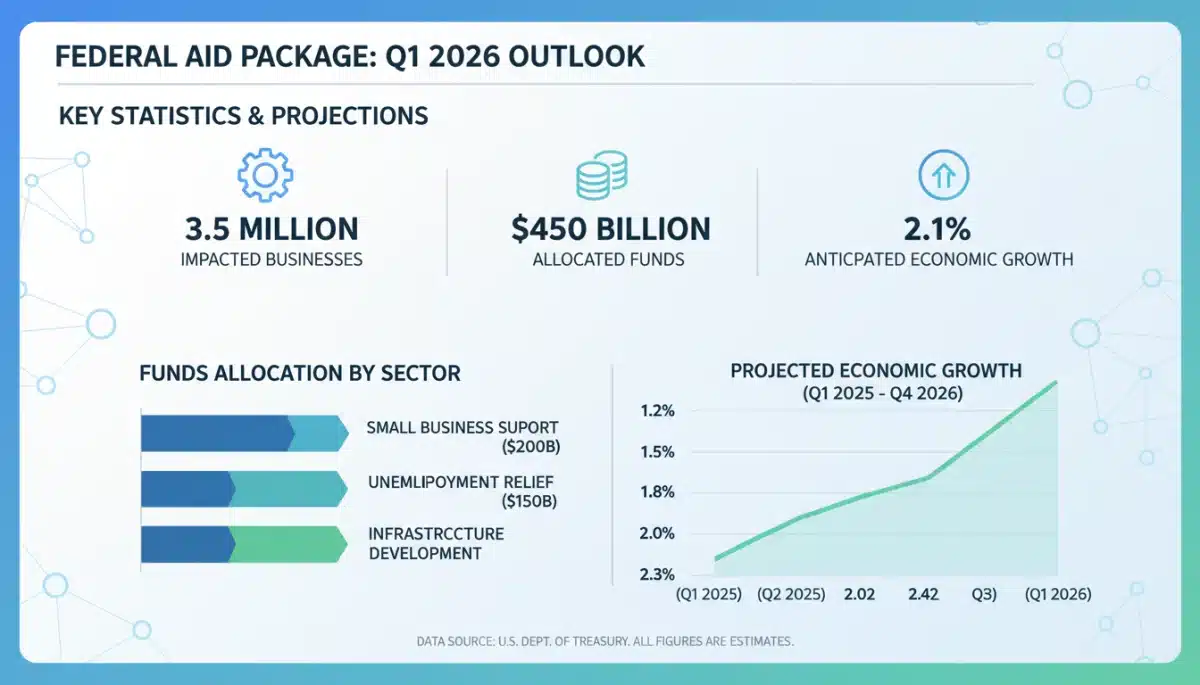
With an estimated 300,000 enterprises expected to benefit, the package aims to strengthen the competitive position of small businesses both domestically and internationally.
This support is crucial for maintaining economic dynamism.
The aid is not merely a short-term fix but a strategic investment in the long-term viability and growth potential of the small business sector, ensuring they can adapt to future challenges.
Job Creation and Economic Stimulus
A primary objective of the federal aid package 2026 is to stimulate job creation and retention.
By providing businesses with the capital to maintain payrolls and expand operations, the government aims to reduce unemployment and boost consumer spending.
Economists predict that the injection of funds will lead to a significant increase in hiring, particularly in sectors that have struggled to recover fully. This will have a direct positive impact on household incomes and overall economic stability.
The multiplier effect of small business growth means that every dollar invested in these enterprises will generate several dollars in broader economic activity, fueling a robust recovery.
Innovation and Digital Transformation
The federal aid package 2026 also places a strong emphasis on fostering innovation and digital transformation among small businesses.
Many provisions are earmarked for technology upgrades, e-commerce development, and cybersecurity enhancements.
This focus recognizes the increasing importance of digital capabilities in today’s market. Businesses that can adapt and innovate digitally are better positioned for long-term success and competitiveness.
Through grants and technical assistance, the package will enable small businesses to adopt cutting-edge tools and strategies, helping them to reach new customers and operate more efficiently.
Industry Reactions and Expert Analysis
The announcement of the federal aid package 2026 has been met with a mix of optimism and cautious anticipation from industry leaders and economic analysts.
Many view it as a necessary step, while others emphasize the importance of effective implementation.
Small business advocacy groups have lauded the package, highlighting its potential to alleviate financial pressures and foster a more stable operating environment. Their input was crucial in shaping the final legislation.
Economic experts are now scrutinizing the details, offering insights into its potential long-term effects and the challenges that may arise during its rollout.
Perspectives from Small Business Owners
Small business owners, the direct beneficiaries of the federal aid package 2026, express a sense of relief and renewed hope.
Many have faced unprecedented challenges in recent years, making this support vital for their survival and future planning.
For many, the aid means the difference between closing their doors or continuing to serve their communities and provide employment. It offers a chance to rebuild and adapt to new market realities.
However, some owners remain cautious, emphasizing the need for clear guidelines and a straightforward application process to ensure the aid reaches those who need it most, without undue delays.
Economists Weigh In on Long-Term Effects
Economists are analyzing the potential long-term ramifications of the federal aid package 2026, examining how it might reshape the small business landscape.
The consensus suggests a positive trajectory if the funds are allocated efficiently.
They point to the potential for increased market competition, higher wages, and a more robust supply chain as direct benefits. The investment in small businesses is seen as an investment in the entire economy’s future.
However, concerns about inflation and equitable distribution of funds are also part of the discussion, with calls for strict oversight to ensure the package achieves its intended goals without adverse side effects.
Challenges and Opportunities for Implementation
While the approval of the federal aid package 2026 is a significant victory, its successful implementation presents both challenges and opportunities.
Ensuring that the aid reaches its intended recipients efficiently and effectively will be paramount.
Bureaucracy, communication, and equitable distribution are key areas that will require careful management. The government is committed to learning from past aid programs to optimize this one.
However, the package also offers an unprecedented opportunity to modernize small business support systems and build a more resilient economic infrastructure for the future.
Overcoming Bureaucratic Hurdles
One of the primary challenges for the federal aid package 2026 will be minimizing bureaucratic hurdles.
Past aid programs have sometimes been criticized for their complex application processes and slow disbursement of funds.
To address this, federal agencies are reportedly investing in new technologies and staffing to streamline the application review and approval process. The goal is to make access to funds as seamless as possible for small business owners.
Clear communication and dedicated support channels will also be crucial in guiding applicants and resolving any issues that may arise, ensuring that businesses can quickly benefit from the aid.
Ensuring Equitable Distribution
Ensuring equitable distribution of the federal aid package 2026 is a critical opportunity to address historical disparities.
Provisions are expected to prioritize businesses in economically disadvantaged areas and those owned by minorities and women.
This focus aims to level the playing field, providing capital to businesses that have traditionally faced greater barriers to accessing funding. It’s a step towards fostering a more inclusive and diverse entrepreneurial ecosystem.
Monitoring mechanisms will be put in place to track the distribution of funds, ensuring that the aid reaches a broad spectrum of small businesses and promotes economic justice.
Preparing for Q1 2026: What Businesses Need to Do Now
With the federal aid package 2026 set for implementation in Q1 2026, small business owners should begin preparing now to maximize their chances of securing funding. Proactive planning can significantly improve an applicant’s success rate.
This preparation includes gathering necessary documentation, understanding the specific programs available, and assessing their business’s current financial health. Early engagement can make a substantial difference.
Staying informed through official channels and consulting with financial advisors will be key steps in navigating the application landscape effectively.

Documentation and Financial Readiness
Businesses interested in applying for the federal aid package 2026 should immediately begin organizing their financial records.
This includes tax returns, profit and loss statements, payroll records, and bank statements.
Having these documents readily accessible will expedite the application process and demonstrate a clear picture of the business’s financial standing and need. Accuracy and completeness are paramount.
Additionally, businesses should review their current operational costs and potential areas for investment, aligning these with the objectives of the aid package to present a strong case for funding.
Seeking Professional Guidance
Navigating the complexities of federal aid programs can be challenging, making professional guidance invaluable. Small business owners should consider consulting with accountants, legal advisors, and business consultants.
These professionals can offer expert advice on eligibility, application strategies, and compliance requirements for the federal aid package 2026. Their expertise can help avoid common pitfalls and optimize the application.
Many local Small Business Development Centers (SBDCs) and SCORE mentors also offer free or low-cost assistance, providing a valuable resource for businesses seeking to understand and apply for the aid.
Long-Term Outlook and Future Economic Resilience
The approval of the federal aid package 2026 is not merely a response to immediate needs but a forward-looking strategy to enhance the long-term economic resilience of small businesses. It signals a commitment to sustainable growth.
By investing in small enterprises, the government aims to create a more diversified and robust economy, capable of withstanding future shocks. This package lays the groundwork for a more stable future.
The success of the federal aid package 2026 will likely serve as a blueprint for future governmental interventions, demonstrating the efficacy of targeted support for the small business sector.
Building a Stronger Small Business Ecosystem
The federal aid package 2026 is expected to contribute significantly to building a stronger and more interconnected small business ecosystem.
Enhanced funding means more collaborations, innovation, and shared resources.
This ecosystem will foster greater resilience, allowing businesses to collectively overcome challenges and capitalize on new opportunities. It’s about creating a supportive network where small businesses can thrive.
Mentorship programs, networking events, and shared digital platforms, often supported by federal initiatives, will become even more crucial in fostering this collaborative environment.
Monitoring Economic Indicators Post-Implementation
Following the implementation of the federal aid package 2026, continuous monitoring of key economic indicators will be essential.
This includes tracking small business growth rates, employment figures, and consumer spending trends.
Such data will provide critical insights into the effectiveness of the package and help policymakers make informed decisions regarding future economic support. Transparency and accountability will be key.
The ongoing analysis will ensure that any necessary adjustments can be made to maximize the positive impact of the aid and ensure the sustained health of the small business sector.
| Key Aspect | Description |
|---|---|
| Approval Date | Recently approved, set for Q1 2026 implementation. |
| Target Beneficiaries | Over 300,000 small businesses nationwide. |
| Key Provisions | Grants, enhanced loan programs, technical assistance. |
| Economic Impact | Job creation, digital transformation, economic stability. |
Frequently Asked Questions About the Federal Aid Package 2026
The primary purpose is to provide crucial financial relief and strategic support to over 300,000 small businesses across the United States. This aims to foster economic stability, stimulate growth, and help businesses recover from ongoing challenges by offering grants, loans, and technical assistance.
The federal aid package 2026 has been approved and is scheduled for implementation in the first quarter of 2026. Businesses should start preparing now by gathering necessary documentation and staying informed about the application process to ensure timely access to the funds.
Eligibility for the federal aid package 2026 is broad, targeting various small businesses, including those in underserved communities and sectors hit hard by economic fluctuations. Criteria will likely involve employee count, revenue thresholds, and demonstrated economic hardship, ensuring funds reach those most in need.
A key objective of the federal aid package 2026 is to stimulate job creation and retention. By providing capital for payrolls and expansion, the government anticipates a significant increase in hiring, particularly in struggling sectors, thereby boosting consumer spending and overall economic stability.
Small businesses should prepare by organizing financial records, understanding specific program details, and assessing their current financial health. Consulting with financial advisors or local Small Business Development Centers can also provide invaluable guidance for navigating the application process effectively and maximizing benefits.
Looking Ahead: Impact and Implications
The approval of the federal aid package 2026 marks a pivotal moment for small businesses, laying the groundwork for substantial economic recovery and growth.
This initiative is expected to reshape the landscape for hundreds of thousands of enterprises, solidifying their role as key drivers of the American economy.
As Q1 2026 approaches, businesses must remain vigilant, monitoring official announcements and preparing diligently to leverage the opportunities presented by this comprehensive support system.
The long-term success hinges on efficient implementation and active participation from the small business community.
This package is more than just financial relief; it’s an investment in the future resilience and adaptability of the nation’s entrepreneurial spirit, setting a new standard for governmental support in challenging economic times.