Future-Proofing Skills: Top 7 Certifications for 2026 US Jobs

Anúncios
Latest developments on Future-Proofing Your Skills: Top 7 In-Demand Educational Certifications for 2026 in the United States, with key facts, verified sources and what readers need to monitor next in Estados Unidos, presented clearly in Inglês (Estados Unidos) (en-US).
Future-Proofing Your Skills: Top 7 In-Demand Educational Certifications for 2026 in the United States is shaping today’s agenda with new details released by industry analysts and educational institutions.
This update prioritizes what changed, why it matters, and what to watch next, in a straightforward news format for professionals nationwide.
Anúncios
The landscape of employment is undergoing a profound transformation, driven by technological advancements and shifting economic priorities. Understanding which skills will remain relevant and highly sought after is crucial for career longevity and success, a sentiment echoed by recent reports from the Bureau of Labor Statistics.
This analysis delves into the specific certifications poised to offer significant advantages, providing a roadmap for individuals looking to invest wisely in their professional development. The focus remains on actionable insights, moving beyond generic advice to pinpoint tangible educational opportunities.
The Shifting Landscape of the American Job Market
The United States job market is experiencing unprecedented evolution, with automation, artificial intelligence, and global connectivity reshaping traditional roles and creating entirely new ones. This dynamic environment necessitates a proactive approach to skill acquisition, especially as we approach 2026.
Anúncios
Economic forecasts indicate a continued demand for specialized expertise that complements technological innovation rather than being replaced by it. Professionals must adapt to these changes, ensuring their skill sets remain competitive and aligned with emerging industry needs.
This means a strategic investment in specific educational certifications is no longer merely an advantage but a necessity for many. The goal is to identify and pursue credentials that offer verifiable value and open doors to high-growth sectors, ensuring individuals are well-positioned for future opportunities.
The Imperative for Continuous Learning
Continuous learning has transitioned from a beneficial practice to a fundamental requirement in the modern workforce. The pace of innovation dictates that skills acquired today may become obsolete tomorrow, underscoring the critical need for ongoing education and certification.
Employers are increasingly valuing candidates who demonstrate a commitment to lifelong learning and possess verifiable credentials in cutting-edge fields. This trend highlights why future-proofing skills certifications are essential for career progression and stability.
Without a proactive strategy for skill development, professionals risk falling behind in a competitive market. Educational certifications offer a structured and recognized pathway to acquiring and validating these crucial new competencies, directly addressing the demands of the evolving economy.
- Rapid technological advancements necessitate constant skill upgrades.
- Employers prioritize candidates with verifiable, up-to-date certifications.
- Continuous learning is key to maintaining career relevance and growth.
Cybersecurity Certifications: A Growing Necessity
As digital threats proliferate and data breaches become more sophisticated, the demand for skilled cybersecurity professionals continues to skyrocket. This sector is not merely growing; it is becoming an indispensable pillar of every industry, from finance to healthcare.
Certifications in cybersecurity demonstrate a comprehensive understanding of protecting sensitive information, networks, and systems from malicious attacks. These credentials are vital for individuals aiming to secure roles that are critical to national infrastructure and corporate integrity.
The continuous evolution of cyber threats means that expertise in this field is perpetually in demand, making cybersecurity certifications a prime example of future-proofing skills certifications. These qualifications offer a clear pathway into a robust and expanding career field, providing both stability and significant growth potential.
CompTIA Security+ and Certified Information Systems Security Professional (CISSP)
The CompTIA Security+ certification is an entry-level credential widely recognized for establishing fundamental cybersecurity knowledge. It covers core security functions, making it an excellent starting point for those new to the field.
For more experienced professionals, the Certified Information Systems Security Professional (CISSP) is a highly respected and advanced certification. CISSP validates expertise in designing, implementing, and managing enterprise-wide information security programs, opening doors to leadership roles.
These certifications are not just about technical knowledge; they also signify a commitment to best practices and ethical standards in cybersecurity. They are critical components of future-proofing skills certifications, ensuring professionals are equipped to handle complex security challenges.
- CompTIA Security+ provides foundational cybersecurity knowledge.
- CISSP is for experienced professionals managing security programs.
- Both certifications are crucial for addressing evolving cyber threats.
Cloud Computing Expertise: Powering the Digital Future
Cloud computing has become the backbone of modern enterprise, enabling scalability, flexibility, and innovation across virtually all sectors. As businesses increasingly migrate their operations to cloud platforms, the need for professionals proficient in cloud architecture and management intensifies.
Certifications from major cloud providers like Amazon Web Services (AWS), Microsoft Azure, and Google Cloud Platform (GCP) validate essential skills in deploying, managing, and optimizing cloud resources. These credentials are highly valued and directly translate into significant career opportunities.
Investing in cloud computing certifications is a strategic move for anyone looking to future-proof their skills certifications. The pervasive nature of cloud technology ensures that experts in this domain will remain critical to business operations for the foreseeable future, driving innovation and efficiency.
AWS Certified Solutions Architect and Microsoft Certified: Azure Administrator Associate
The AWS Certified Solutions Architect – Associate certification is one of the most sought-after cloud credentials, validating the ability to design distributed systems on AWS. It demonstrates proficiency in architecting scalable, highly available, and fault-tolerant systems.
Similarly, the Microsoft Certified: Azure Administrator Associate certification proves expertise in implementing, managing, and monitoring an organization’s Microsoft Azure environment. This includes managing identity, governance, storage, compute, and virtual networking.
Both certifications are industry benchmarks for cloud proficiency, signifying a deep understanding of cloud infrastructure and services. They are vital for professionals aiming to be at the forefront of digital transformation and are prime examples of future-proofing skills certifications.
- AWS Certified Solutions Architect focuses on designing cloud solutions.
- Azure Administrator Associate covers managing Azure environments.
- These certifications are essential for navigating the cloud-first business world.
Data Science and Analytics: Unlocking Insights
In an era defined by vast amounts of information, the ability to collect, process, and interpret data has become a cornerstone of competitive advantage. Data science and analytics professionals are crucial for transforming raw data into actionable insights that drive strategic decisions.
Educational certifications in data science, machine learning, and business intelligence equip individuals with the tools and methodologies to extract value from complex datasets. These skills are highly transferable across industries, from technology and finance to healthcare and marketing.
The demand for data-driven decision-making will only continue to grow, making data science and analytics certifications indispensable for future-proofing skills certifications. Professionals with these credentials are well-positioned to contribute to innovation and efficiency in any organization, ensuring their expertise remains relevant.
Certified Analytics Professional (CAP) and IBM Data Science Professional Certificate
The Certified Analytics Professional (CAP) is a vendor-neutral certification that recognizes expertise in the full analytics process, from framing business problems to deploying and managing analytics models. It signifies a holistic understanding of data analytics.
The IBM Data Science Professional Certificate, offered through Coursera, provides a comprehensive introduction to data science, covering Python programming, data analysis, machine learning, and data visualization. It is an excellent pathway for aspiring data scientists.
These certifications provide a robust foundation and advanced knowledge in data science, helping professionals to navigate the complexities of big data. They are crucial components of future-proofing skills certifications, ensuring individuals can meet the analytical demands of tomorrow’s market.
- CAP certifies comprehensive analytics process expertise.
- IBM Data Science Professional Certificate teaches core data science skills.
- Both are key for leveraging data in strategic decision-making.
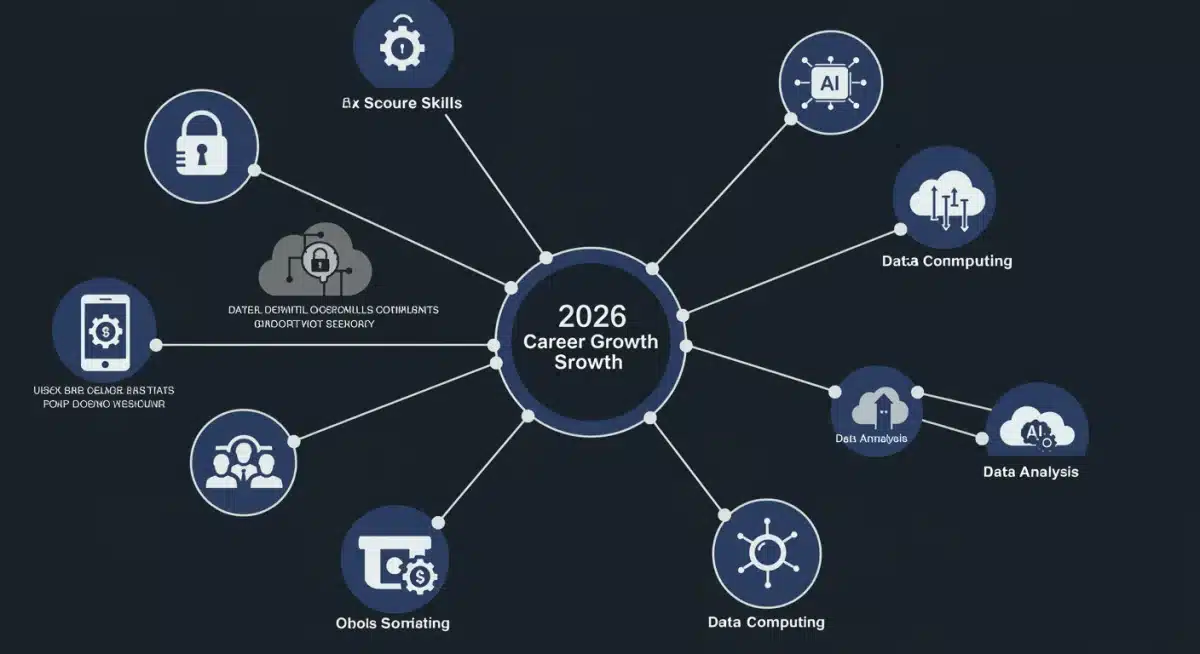
Project Management: Guiding Complex Initiatives
Effective project management remains a critical skill in virtually every industry, as organizations increasingly rely on structured initiatives to achieve their strategic goals. The ability to plan, execute, and deliver projects on time and within budget is invaluable.
Certifications in project management, such as the Project Management Professional (PMP), provide a standardized framework and best practices for leading successful projects. These credentials signify a professional’s capability to navigate complex challenges and drive results.
As businesses continue to undertake ambitious digital transformations and product development cycles, the demand for certified project managers will persist. These certifications are a cornerstone for future-proofing skills certifications, ensuring professionals can effectively steer organizational objectives.
Project Management Professional (PMP)
The Project Management Professional (PMP) certification, offered by the Project Management Institute (PMI), is globally recognized as the gold standard for project management. It validates experience and competency in leading and directing projects.
PMP certification covers five key process groups: initiating, planning, executing, monitoring and controlling, and closing projects. It is applicable across diverse industries and project types, making it highly versatile and valuable in the job market.
Achieving PMP status demonstrates a serious commitment to the profession and enhances credibility, opening doors to advanced roles and higher earning potential. It is an indispensable part of future-proofing skills certifications for those in leadership and organizational roles.
- PMP is a globally recognized standard for project management.
- It covers all phases of project initiation to closure.
- PMP enhances credibility and opens doors to leadership opportunities.
Digital Marketing: Connecting with Modern Consumers
In an increasingly digital world, businesses rely heavily on sophisticated digital marketing strategies to reach and engage their target audiences. Expertise in areas like SEO, content marketing, social media, and paid advertising is crucial for brand visibility and customer acquisition.
Certifications in digital marketing provide structured knowledge and practical skills necessary to navigate the ever-changing online landscape. These credentials demonstrate a professional’s ability to drive measurable results and contribute to business growth in the digital realm.
As consumer behavior continues to shift towards online platforms, the demand for skilled digital marketers will only intensify. These certifications are vital for future-proofing skills certifications, ensuring professionals can effectively connect businesses with their audience in a competitive market.
Google Ads Certification and HubSpot Content Marketing Certification
Google Ads certifications validate expertise in managing paid advertising campaigns across Google’s network, including search, display, and video ads. These certifications are essential for professionals looking to maximize ROI from digital advertising efforts.
The HubSpot Content Marketing Certification focuses on creating and executing effective content strategies, from creation and distribution to analysis. It covers blogging, video, email marketing, and SEO, providing a holistic view of content-driven engagement.
Both certifications are highly practical and directly applicable to current digital marketing needs, making them valuable additions to any professional’s resume. They are key elements of future-proofing skills certifications for individuals involved in online brand promotion and customer engagement.
- Google Ads certifications validate paid advertising expertise.
- HubSpot Content Marketing focuses on strategic content creation.
- Both are essential for effective digital consumer engagement.

Artificial Intelligence and Machine Learning: The Next Frontier
Artificial intelligence (AI) and machine learning (ML) are rapidly transforming industries, automating tasks, enhancing decision-making, and creating innovative products and services. Proficiency in these fields is becoming a significant differentiator in the modern workforce.
Certifications in AI and ML provide specialized knowledge in areas such as neural networks, deep learning, natural language processing, and predictive modeling. These credentials are highly sought after by companies looking to leverage AI for competitive advantage.
The pervasive impact of AI ensures that expertise in this domain will define many future roles, making AI and ML certifications critical for future-proofing skills certifications. Professionals with these skills are poised to lead innovation and drive technological progress across various sectors.
TensorFlow Developer Certificate and IBM AI Engineering Professional Certificate
The TensorFlow Developer Certificate demonstrates proficiency in using TensorFlow, an open-source machine learning framework, to build and deploy ML models. This certification is ideal for developers seeking to specialize in practical AI applications.
The IBM AI Engineering Professional Certificate, available through Coursera, offers a comprehensive curriculum covering machine learning, deep learning, and AI deployment. It is designed to equip individuals with the skills needed to design and implement AI solutions.
These certifications offer practical, hands-on experience with leading AI tools and methodologies, preparing professionals for cutting-edge roles. They are vital components of future-proofing skills certifications, ensuring individuals can contribute to the rapidly evolving AI landscape.
- TensorFlow Developer Certificate focuses on practical ML model development.
- IBM AI Engineering covers machine learning, deep learning, and AI deployment.
- Both are crucial for thriving in the AI-driven future.
Blockchain Technology: Decentralizing the Future
Blockchain technology, initially known for its role in cryptocurrencies, is now being adopted across various industries for its potential to enhance security, transparency, and efficiency. Its applications extend to supply chain management, healthcare, finance, and voting systems.
Certifications in blockchain provide a deep understanding of distributed ledger technologies, smart contracts, and decentralized applications. These skills are emerging as critical for innovators and developers looking to build the next generation of secure and transparent systems.
As more organizations explore and implement blockchain solutions, the demand for skilled professionals will continue to rise. These certifications are a forward-looking investment for future-proofing skills certifications, positioning individuals at the forefront of a transformative technology.
Certified Blockchain Developer (CBD) and Certified Blockchain Solution Architect (CBSA)
The Certified Blockchain Developer (CBD) certification validates a developer’s ability to design, develop, and deploy blockchain-based applications and smart contracts. It focuses on the technical aspects of building on various blockchain platforms.
The Certified Blockchain Solution Architect (CBSA) certification focuses on the architectural design principles of blockchain solutions. It is for professionals who need to understand how to integrate blockchain technology into existing enterprise systems and design new ones.
Both certifications offer specialized knowledge critical for working with blockchain technology, whether in a development or architectural capacity. They are essential future-proofing skills certifications for anyone looking to contribute to the decentralized future, ensuring their expertise is relevant and in demand.
- Certified Blockchain Developer focuses on building blockchain applications.
- Certified Blockchain Solution Architect emphasizes blockchain system design.
- These certifications are vital for navigating the decentralized technology landscape.
| Certification Focus | Key Benefit for 2026 |
|---|---|
| Cybersecurity | Protects digital assets in an increasingly threatened landscape. |
| Cloud Computing | Manages scalable, flexible, and efficient digital infrastructure. |
| Data Science | Transforms data into actionable insights for strategic decisions. |
| AI & Machine Learning | Drives innovation and automation across various industries. |
Frequently Asked Questions About Future-Proofing Skills Certifications
Educational certifications validate specialized knowledge and practical skills that are directly applicable to evolving industry demands. They signal to employers a commitment to continuous learning and adaptation, which is crucial for staying competitive as technologies and job roles change rapidly.
Industries undergoing rapid digital transformation, such as technology, finance, healthcare, and manufacturing, will benefit significantly. The certifications discussed address core needs in cybersecurity, cloud infrastructure, data analytics, and AI, which are critical across these sectors.
The time required varies widely based on the certification, prior experience, and study intensity. Entry-level certifications might take a few weeks to months, while advanced ones like CISSP or PMP can require several months to a year, including prerequisite experience.
Many of the listed certifications, such as CISSP, PMP, and AWS certifications, hold global recognition, making them valuable assets beyond the US market. Their universal applicability stems from addressing fundamental technological and business challenges faced worldwide.
Numerous resources exist, including official vendor training, online courses from platforms like Coursera and edX, bootcamps, and study guides. Many professional organizations also offer support networks and preparatory materials to help individuals achieve their certification goals effectively.
Perspectives
The emphasis on future-proofing skills certifications underscores a critical shift in career development strategies across the United States. As industries continue to evolve at an accelerated pace, these certifications are no longer just supplementary but foundational for maintaining relevance and achieving career growth.
Monitoring the ongoing developments in technology and industry demands will be crucial for professionals. The landscape of in-demand skills is fluid, and continuous assessment of new certifications will be necessary to stay ahead.
This means that investing in these specific educational pathways, rather than general degrees alone, offers a more targeted and effective approach to securing one’s professional future in the dynamic job market of 2026 and beyond. The strategic pursuit of future-proofing skills certifications is an ongoing commitment to adaptability and excellence.