US GDP Growth 2.8% for 2026: Volatility & Opportunities
Anúncios
The latest 2026 economic forecast projects full-year US GDP growth at 2.8%, indicating underlying macroeconomic resilience alongside a changing corporate landscape.
This report delivers a direct, objective breakdown of the structural drivers behind this growth, how tax policy transitions are fueling consumer and business spending, and the volatile market indicators you need to monitor next.
Anúncios
Understanding the 2026 US GDP Growth Projection
The U.S. economy is currently navigating a complex landscape, with various factors influencing its trajectory.
The projected 2.8% US GDP Growth 2026 reflects a consensus among leading economists, indicating a steady, albeit moderate, expansion.
This forecast is a critical benchmark for policymakers, businesses, and investors, offering a glimpse into the potential economic climate in the medium term.
Anúncios
It suggests a period of continued adjustment and adaptation following recent global disruptions.
The 2.8% figure for US GDP Growth 2026 is not merely a number; it encapsulates assumptions about inflation, interest rates, consumer spending, and global trade dynamics.
Its realization will depend heavily on how these underlying variables evolve.
Factors Driving the US GDP Growth 2026 Forecast
Several key factors are anticipated to contribute to the projected US GDP Growth 2026.
These include ongoing technological advancements, particularly in artificial intelligence and automation, which are expected to boost productivity across various sectors.
Additionally, resilient consumer demand, supported by a relatively strong labor market, is likely to continue driving economic activity. Government spending on infrastructure projects and clean energy initiatives could also provide a significant stimulus.
However, the forecast also acknowledges potential headwinds, such as persistent inflationary pressures and the Federal Reserve’s monetary policy responses.
Geopolitical tensions and global supply chain vulnerabilities remain significant risks to the optimistic outlook for US GDP Growth 2026.
Technological Innovations and Productivity
Technological innovation is a primary engine of economic growth, and its impact on US GDP Growth 2026 cannot be overstated.
Breakthroughs in AI, biotechnology, and renewable energy are creating new industries and enhancing efficiency in existing ones.
These innovations lead to increased productivity, which translates into higher output and ultimately, stronger GDP growth.
Businesses are investing heavily in digital transformation, aiming to streamline operations and gain competitive advantages in an evolving market.
Consumer Spending and Labor Market Strength
- Strong labor market conditions support consumer confidence and spending.
- Wage growth, though moderating, helps sustain purchasing power.
- Household balance sheets remain relatively healthy, despite some debt accumulation.
Consumer spending constitutes a significant portion of the U.S. economy, and its sustained strength is crucial for achieving the projected US GDP Growth 2026.
A robust labor market, characterized by low unemployment rates and consistent job creation, is a fundamental driver of this spending.
Navigating Market Volatility in the Coming Years
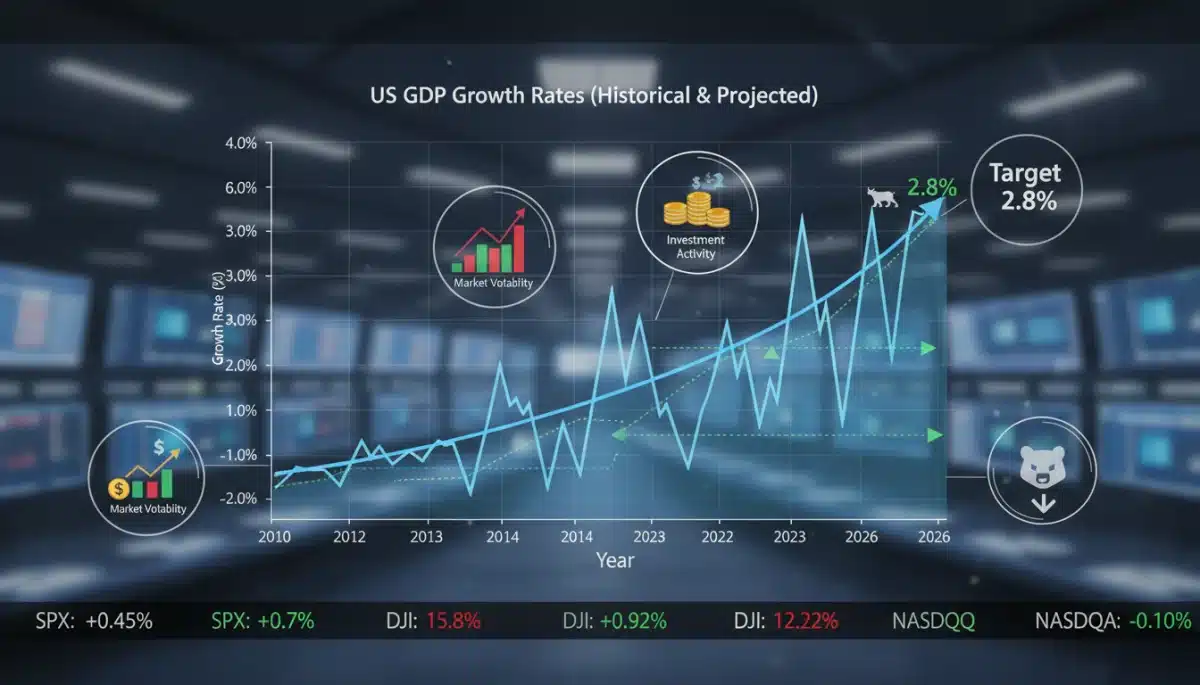
Despite the positive US GDP Growth 2026 forecast, market volatility is expected to persist. Investors and businesses must prepare for fluctuations driven by economic data releases, geopolitical events, and shifts in monetary policy.
The interplay between inflation, interest rates, and corporate earnings will likely create periods of uncertainty and rapid market adjustments.
Risk management and diversified investment strategies will be paramount in this environment.
Understanding the sources of this volatility and adopting a long-term perspective will be key to successfully navigating the markets. The projected US GDP Growth 2026 offers a foundation, but the path to it may be uneven.
Inflationary Pressures and Monetary Policy
Inflation remains a critical concern, influencing both consumer behavior and central bank decisions.
The Federal Reserve’s approach to managing inflation will directly impact interest rates and, consequently, borrowing costs for businesses and consumers, affecting the overall US GDP Growth 2026 outlook.
Higher interest rates can cool down an overheating economy but also risk stifling growth, presenting a delicate balancing act for policymakers.
Their decisions will be closely watched for their implications on the broader economic landscape.
Global Economic Headwinds
- Geopolitical conflicts can disrupt supply chains and commodity prices.
- Slower growth in major trading partners affects U.S. export demand.
- Currency fluctuations impact international trade and investment flows.
The global economic environment plays a significant role in the U.S. outlook.
External shocks, such as geopolitical tensions or a slowdown in major economies, can easily transmit to the U.S. through trade, investment, and confidence channels, potentially impacting the US GDP Growth 2026.
Emerging Opportunities Amidst Economic Shifts
While volatility presents challenges, it also uncovers significant opportunities. The projected US GDP Growth 2026, even with its complexities, creates fertile ground for strategic investments and innovation across various sectors.
Sectors like renewable energy, digital infrastructure, and healthcare technology are poised for substantial growth, driven by both market demand and supportive government policies.
Businesses that adapt quickly to evolving consumer preferences and technological advancements will thrive.
Investors can identify undervalued assets or high-growth companies that are well-positioned to capitalize on these trends.
The economic shifts are creating a new landscape of opportunities for those who are prepared to seize them, contributing to the overall strength of US GDP Growth 2026.
Growth Sectors and Investment Hotspots
The renewable energy sector, including solar, wind, and battery storage technologies, is experiencing exponential growth, fueled by climate change concerns and policy incentives.
This creates numerous investment opportunities for those looking to contribute to a sustainable future and reap financial rewards.
Digital infrastructure, encompassing 5G networks, cloud computing, and cybersecurity, is another area of robust expansion.
The increasing reliance on digital technologies across all aspects of life ensures continued demand and investment in these critical services, supporting US GDP Growth 2026.
Resilience in the Face of Uncertainty
- Diversification across asset classes helps mitigate risks.
- Long-term investment horizons can smooth out short-term volatility.
- Focus on companies with strong fundamentals and adaptive business models.
Building economic resilience is crucial for both individuals and businesses. This involves not only financial preparedness but also strategic planning that considers a range of potential scenarios.
The ability to adapt quickly to changing market conditions will define success in the years leading up to and including US GDP Growth 2026.
Impact on Businesses and Consumers
The US GDP Growth 2026 forecast has direct implications for businesses, affecting everything from investment decisions to hiring strategies. Companies will need to carefully assess market demand and operational costs to remain competitive.
For consumers, the economic outlook influences job security, wage growth, and purchasing power. Understanding these dynamics helps individuals make informed decisions about savings, investments, and major purchases.
Both businesses and consumers will need to remain agile and responsive to economic signals. The projected US GDP Growth 2026 suggests a landscape where strategic planning and informed choices are more important than ever.
Business Strategy and Adaptation
Businesses looking to capitalize on the projected US GDP Growth 2026 must prioritize agility and innovation.
This involves investing in research and development, optimizing supply chains, and adopting flexible business models that can withstand economic shocks.
Strategic planning should also include a focus on talent acquisition and retention, as a skilled workforce is essential for driving productivity and maintaining a competitive edge.
Companies that embrace digital transformation will be better positioned for future success.
Consumer Financial Planning
- Reviewing personal budgets and managing debt effectively.
- Diversifying investment portfolios to spread risk.
- Staying informed about interest rate changes and their impact on loans.
For consumers, the US GDP Growth 2026 outlook underscores the importance of prudent financial planning.
Building an emergency fund, investing wisely, and understanding the implications of economic trends on personal finances are vital steps to ensure financial stability.
Regional Economic Disparities and Growth
While the national US GDP Growth 2026 forecast provides an overall picture, it’s important to recognize that economic performance can vary significantly across different regions of the United States.
Certain states and metropolitan areas may experience higher growth rates due to specific industry concentrations or demographic trends.
For example, regions with strong technology hubs or burgeoning renewable energy sectors might outperform the national average.
Conversely, areas heavily reliant on declining industries could face more significant economic challenges, even with a positive overall US GDP Growth 2026.
Understanding these regional disparities is crucial for localized investment decisions, urban planning, and governmental support programs.
A blanket approach may not be effective, and tailored strategies are often required to foster equitable economic development.
Localized Economic Drivers
Specific economic drivers often dictate regional growth patterns, influencing the local impact of the national US GDP Growth 2026.
For instance, states with robust manufacturing bases, particularly in advanced sectors, can see sustained job creation and investment.
Similarly, regions attracting significant venture capital for startups often experience dynamic growth in innovation and employment. These localized strengths contribute disproportionately to the broader economic narrative.
Policy Implications for Regional Development
- Targeted federal and state funding for infrastructure in underserved areas.
- Incentives for businesses to relocate or expand in economically struggling regions.
- Educational programs tailored to meet the workforce needs of emerging local industries.
Government policies play a vital role in addressing regional economic disparities and ensuring that the benefits of US GDP Growth 2026 are broadly distributed.
Strategic investments in education, infrastructure, and business incentives can help stimulate growth in areas that might otherwise lag behind.
Global Economic Context and Trade Relations
The projected US GDP Growth 2026 cannot be viewed in isolation; it is deeply intertwined with the global economic context and international trade relations.
The health of major trading partners, global supply chain stability, and geopolitical dynamics all exert significant influence.
Changes in trade policies, tariffs, or international agreements can directly impact U.S. exports and imports, affecting various domestic industries.
A stable and predictable global trade environment is generally conducive to stronger economic performance.
Monitoring global indicators and understanding international economic trends is therefore essential for a comprehensive outlook on the US GDP Growth 2026.
The interconnectedness of modern economies means that external factors will always play a role in domestic prosperity.
Impact of International Trade Agreements
International trade agreements shape the competitive landscape for U.S. businesses and influence the flow of goods and services across borders.
Favorable agreements can boost exports and attract foreign investment, contributing positively to US GDP Growth 2026.
Conversely, trade disputes or protectionist policies can disrupt established supply chains and increase costs, potentially hindering economic expansion.
The ongoing evolution of global trade frameworks requires constant monitoring and adaptation by businesses and policymakers.
Geopolitical Stability and Economic Resilience
- Geopolitical tensions can lead to increased energy prices and supply disruptions.
- International conflicts can deter foreign investment and impact market confidence.
- Diplomatic efforts to maintain stability are crucial for global economic growth.
Geopolitical stability is a foundational element for sustained economic growth.
Periods of international uncertainty or conflict often translate into increased market volatility and reduced investment, posing risks to the projected US GDP Growth 2026.
Long-Term Economic Outlook Beyond 2026
While the focus is currently on the US GDP Growth 2026 projection, it is equally important to consider the longer-term economic outlook.
The trends and policies established in the coming years will shape the U.S. economy for decades to come.
Factors such as demographic shifts, environmental challenges, and the pace of technological innovation will continue to influence growth potential.
Sustainable economic policies and investments in human capital will be critical for maintaining long-term prosperity.
The US GDP Growth 2026 forecast serves as a stepping stone, providing insights into the immediate future while also highlighting the enduring challenges and opportunities that will define the U.S. economic trajectory in the longer run.
Demographic Shifts and Workforce Dynamics
Demographic changes, including an aging population and evolving immigration patterns, will significantly influence the U.S. workforce and economic productivity beyond US GDP Growth 2026.
Ensuring a skilled and adaptable labor force is paramount for sustained growth.
Investments in education, vocational training, and lifelong learning initiatives are crucial to address potential labor shortages and adapt to the demands of a rapidly changing economy. These efforts will support future economic expansion.
Sustainability and Green Economy Initiatives
- Transition to renewable energy sources creates new industries and jobs.
- Sustainable practices reduce long-term environmental and economic costs.
- Green technology innovation drives efficiency and global competitiveness.
The transition to a greener economy represents both a challenge and a massive opportunity for long-term growth.
Investments in sustainable technologies and practices will not only address climate change but also foster new industries, create jobs, and contribute to the overall resilience of the economy well beyond the US GDP Growth 2026 horizon.
| Key Point | Brief Description |
|---|---|
| 2026 GDP Projection | US GDP growth is projected at 2.8%, indicating moderate expansion. |
| Market Volatility | Fluctuations expected due to inflation, interest rates, and geopolitics. |
| Emerging Opportunities | Growth in tech, renewable energy, and digital infrastructure. |
| Impact on Stakeholders | Businesses and consumers need strategic planning for economic shifts. |
Frequently Asked Questions About the 2026 Economic Forecast
The 2.8% projection for US GDP Growth 2026 indicates a continued, albeit moderate, expansion of the U.S. economy. This figure suggests a period of sustained activity, driven by various domestic and international factors. It is a key indicator for economic health and future policy decisions, reflecting a balanced outlook.
The forecast for US GDP Growth 2026 is primarily driven by technological advancements, particularly in AI and automation, and resilient consumer spending supported by a strong labor market. Government investments in infrastructure and green energy also contribute significantly to this positive outlook, fostering economic activity and productivity.
Market volatility, influenced by inflation, interest rates, and geopolitical events, is expected to persist, even with the projected US GDP Growth 2026. This means businesses and investors should prepare for fluctuations, requiring agile strategies and diversified portfolios to mitigate risks and capitalize on emerging opportunities effectively.
The economic shifts supporting US GDP Growth 2026 create significant opportunities in sectors like renewable energy, digital infrastructure, and healthcare technology. Strategic investments and innovation in these areas are poised for substantial growth. Businesses that adapt to evolving consumer preferences and technological trends will find new avenues for expansion.
In response to the US GDP Growth 2026 forecast, businesses should focus on agility, innovation, and strategic investment, while consumers should prioritize prudent financial planning, including budgeting and diversified investments. Both should stay informed about economic trends to make informed decisions and adapt to the evolving market landscape effectively.
Looking Ahead: Implications and Next Steps
The latest Economic Forecast Update: US GDP Growth Projected at 2.8% for 2026, Signaling Continued Market Volatility and Opportunities, clarifies the economic trajectory for the coming years.
It underscores the importance of staying informed about key economic indicators and policy decisions. Businesses should refine their strategies to leverage emerging growth sectors and build resilience against potential market fluctuations.
Consumers are advised to maintain robust financial planning and adapt to evolving economic conditions.
This above-consensus optimism stems largely from structural policy transitions, where the initial friction of sweeping trade tariffs is expected to be offset by sweeping business and personal tax cuts.
While macro indicators signal structural resilience and rising productivity, institutional data suggests that individual market sectors and labor pools will experience highly asymmetric impacts.
To explore how these underlying drivers, easing financial conditions, and corporate investment incentives are creating an outlier scenario compared to typical consensus models, you can read the comprehensive breakdown on US GDP growth projections outperforming economist forecasts from Goldman Sachs.
The interplay of domestic policy, technological innovation, and global events will continue to shape the path to and beyond the projected US GDP Growth 2026, making continuous monitoring essential for all stakeholders.