US States Invest $500M in 2026 for Workforce Development Programs
Anúncios
In 2026, the landscape of the American labor market is undergoing its most profound transformation since the industrial revolution.
With the full-scale deployment of Agentic AI across sectors, the focus has shifted from simple job preservation to radical skill agility.
States are no longer just reacting to unemployment; they are proactively investing in “Human Capital Infrastructure.”
Anúncios
This year’s landmark $500 million federal-state partnership represents a nationwide commitment to ensuring that workers in manufacturing, logistics, and administrative services are not left behind, but rather elevated into high-growth roles in the green economy and tech-enabled healthcare.
US States Unveil $500 Million Investment for Skill Retraining in 2026
Officials across various US states have announced a collective commitment of $500 million for 2026, earmarked specifically for Workforce Development Programs.
This significant investment is poised to revolutionize skill retraining initiatives, directly impacting job seekers and employers nationwide.
Anúncios
The funding aims to bolster existing programs and launch new ones, focusing on critical sectors experiencing rapid transformation and skill shortages.
This strategic allocation underscores a proactive approach to economic development and long-term labor market stability.
The announcement emphasizes a collaborative effort between state governments, educational institutions, and private industries to design and implement effective training solutions.
The overarching goal is to create a more agile and skilled workforce, ready for the demands of the 21st-century economy.
The investment in Workforce Development Programs seeks to address the evolving nature of work, where automation and technological advancements continually reshape industries.
By focusing on skill retraining, states are preparing their populations for the jobs of tomorrow, ensuring economic resilience.
This initiative is not merely about job placement but about fostering career progression and economic mobility for individuals.
It also provides businesses with access to a highly skilled talent pool, reducing recruitment costs and boosting productivity.
Strategic Allocation Across Key Sectors
The $500 million investment will be strategically distributed across various high-growth and in-demand sectors.
These include advanced manufacturing, information technology, renewable energy, and healthcare, areas identified as crucial for future economic prosperity.
Each state will tailor its specific Workforce Development Programs to meet local labor market needs, ensuring that funds are utilized efficiently and effectively.
This localized approach allows for greater responsiveness to regional economic conditions and industry demands.
Early reports suggest a strong emphasis on programs that offer certifications, apprenticeships, and hands-on training, providing tangible skills that are immediately applicable in the workplace.
The goal is to bridge the gap between educational offerings and industry requirements.
Driving Economic Resilience Through Targeted Training
The allocation of $500 million towards Workforce Development Programs is a clear indicator of states’ commitment to fostering economic resilience.
By investing in skill retraining, governments are actively working to mitigate the impact of economic downturns and technological shifts on their workforces.
These programs are designed to equip individuals with adaptable skills, enabling them to transition smoothly between roles and industries as market demands evolve.
This adaptability is key to maintaining a robust and competitive economy in the long run.
Furthermore, by supporting continuous learning and upskilling, states are cultivating a culture of innovation and lifelong education. This not only benefits individual workers but also strengthens the overall economic fabric of the region.
The Role of Public-Private Partnerships
A significant aspect of these Workforce Development Programs involves fostering robust public-private partnerships.
Collaborations between state agencies, educational institutions, and private companies are crucial for designing relevant and effective training curricula.
These partnerships ensure that training programs are aligned with actual industry needs, providing participants with skills that are directly transferrable to available jobs.
Companies often contribute resources, expertise, and even job placement opportunities, creating a symbiotic relationship.
Such collaborations also help in identifying emerging skill gaps early on, allowing for the rapid development of new training modules to address these needs proactively.
This dynamic approach is essential for staying ahead in a fast-changing global economy.
Addressing Skill Gaps and Future Job Market Demands

A primary objective of the increased funding for Workforce Development Programs is to directly address existing skill gaps within the labor force.
Many industries are struggling to find qualified candidates, and these programs aim to close that divide.
By proactively retraining workers in areas such as digital literacy, data analytics, and advanced technical skills, states are preparing their populations for the jobs that are currently in high demand and those projected to grow.
This foresight is critical for sustained economic health.
The programs also focus on reskilling workers from declining industries, offering them new opportunities in burgeoning sectors.
This ensures that valuable human capital is retained and redirected, preventing long-term unemployment and fostering career transitions.
The emphasis on future job market demands means that Workforce Development Programs are not just reactive but predictive.
They leverage labor market data and economic forecasts to anticipate future needs, ensuring that training investments yield maximum returns.
This forward-thinking strategy helps individuals avoid skills obsolescence and provides them with a competitive edge in the job market. It also positions states as attractive hubs for businesses seeking a skilled and adaptable workforce.
Innovative Training Models and Technologies
The $500 million investment will also support the adoption of innovative training models and technologies within Workforce Development Programs.
This includes virtual reality (VR) simulations, artificial intelligence (AI)-driven learning platforms, and hybrid learning environments.
These advanced tools provide immersive and flexible learning experiences, making training more accessible and engaging for a wider range of participants.
They also allow for personalized learning paths, catering to individual needs and learning styles.
Furthermore, the integration of cutting-edge technologies in training ensures that workers are not only learning new skills but are also becoming proficient in using the very tools that define modern workplaces.
This dual benefit enhances their marketability and productivity.
Impact on Local Economies and Community Development
The enhanced Workforce Development Programs are expected to have a profound impact on local economies and community development.
By increasing the number of skilled workers, these programs stimulate economic growth and attract new businesses.
A stronger local workforce leads to higher wages, increased consumer spending, and a more robust tax base, benefiting entire communities. This investment acts as a catalyst for broader economic revitalization.
Moreover, by providing opportunities for career advancement and stable employment, these programs contribute to improved quality of life and reduced social inequalities.
They offer pathways out of poverty and foster a sense of purpose and achievement among participants.
Ensuring Equitable Access and Inclusivity in Programs
A core principle guiding the allocation of funds for Workforce Development Programs is ensuring equitable access and inclusivity.
States are committed to reaching diverse populations, including underserved communities, veterans, and individuals with disabilities.
Efforts are being made to remove barriers to participation, such as providing childcare support, transportation assistance, and flexible scheduling options.
The goal is to make skill retraining accessible to anyone who seeks to improve their career prospects.
By intentionally designing inclusive programs, states are not only addressing social equity but also tapping into a broader talent pool, strengthening the overall workforce. This focus on diversity enriches workplaces and drives innovation.
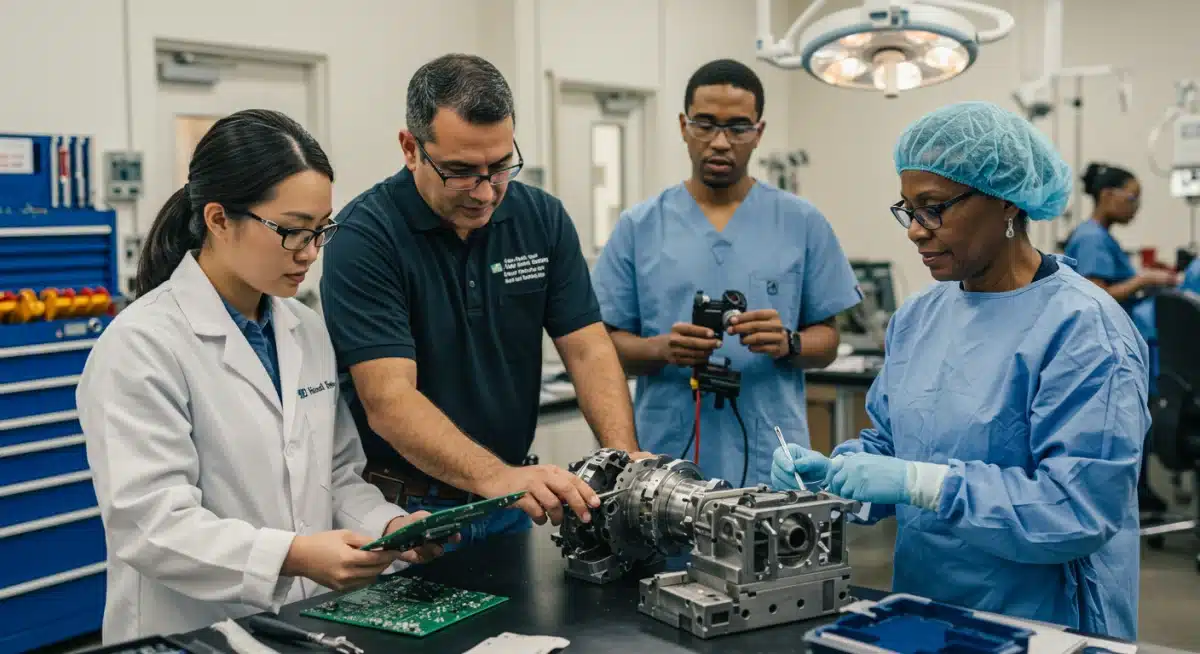
The emphasis on accessibility also extends to providing tailored support services, including career counseling, mentorship, and job placement assistance.
These holistic approaches ensure that participants not only gain new skills but also successfully transition into meaningful employment.
State agencies are collaborating with community organizations and non-profits to reach individuals who might not otherwise engage with traditional training pathways.
This outreach is crucial for maximizing the impact of Workforce Development Programs.
Measuring Success and Program Accountability
With such a substantial investment, there is a strong emphasis on measuring the success and ensuring the accountability of Workforce Development Programs.
States are implementing robust evaluation frameworks to track key performance indicators.
These indicators include participant completion rates, job placement rates, wage increases, and employer satisfaction.
Regular reporting and transparent data sharing will ensure that the programs are meeting their objectives and delivering tangible results.
Continuous feedback loops and program adjustments based on performance data will be critical to optimizing the effectiveness of these initiatives.
This commitment to data-driven decision-making ensures that the $500 million investment yields the highest possible returns for both individuals and the economy.
Future Outlook: Sustaining Momentum in Workforce Development
The $500 million investment in Workforce Development Programs for 2026 marks a significant milestone, but states are already looking towards sustaining this momentum.
The goal is to establish long-term strategies for continuous workforce adaptation.
This includes exploring additional funding sources, fostering ongoing public-private collaborations, and integrating workforce development into broader economic development plans.
The aim is to create a perpetual cycle of upskilling and reskilling.
The success of these initiatives in 2026 will lay the groundwork for future investments and policy decisions, ensuring that the US workforce remains globally competitive and resilient.
The focus is on building a sustainable framework for skill retraining.
| Key Aspect | Description |
|---|---|
| Investment Amount | US states allocate $500 million for 2026. |
| Primary Focus | Skill retraining and job readiness programs. |
| Key Sectors | Advanced manufacturing, IT, healthcare, renewable energy. |
| Expected Impact | Enhanced economic resilience and a more skilled workforce. |
Frequently Asked Questions About Workforce Development Programs
The main goal is to equip the US workforce with the skills needed for current and future job markets. These Workforce Development Programs aim to bridge skill gaps, enhance job readiness, and foster economic resilience through targeted retraining initiatives and strategic investments in human capital.
Industries experiencing rapid technological change and skill shortages, such as advanced manufacturing, information technology, renewable energy, and healthcare, are expected to benefit significantly from these Workforce Development Programs. The funding targets high-growth sectors to ensure long-term economic stability.
States are committed to ensuring equitable access by removing barriers for diverse populations, including underserved communities, veterans, and individuals with disabilities. Workforce Development Programs will offer support services like childcare and transportation, alongside flexible learning options, to maximize participation.
Public-private partnerships are crucial for aligning training with industry needs. Collaborations between state agencies, educators, and private companies ensure that Workforce Development Programs deliver relevant skills, provide job placement opportunities, and adapt quickly to emerging labor market demands.
The effectiveness of Workforce Development Programs will be measured through robust evaluation frameworks. Key performance indicators include participant completion rates, job placement rates, wage increases, and employer satisfaction. Regular reporting and data-driven adjustments will ensure program accountability and impact.
Looking Ahead: Sustaining Workforce Adaptability
The $500 million investment in Workforce Development Programs for 2026 establishes a crucial foundation for future economic stability.
In conclusion, this initiative signals a clear strategic direction for states to proactively manage labor market shifts and technological advancements.
Continued vigilance and adaptive strategies will be essential to build upon this initial commitment.
Monitoring the outcomes of these Workforce Development Programs and fostering ongoing collaboration will determine their long-term success and influence future policy decisions.
This ongoing commitment to skill retraining and workforce development is not a one-time effort but a continuous process crucial for maintaining the US’s economic competitiveness and ensuring prosperous futures for its citizens.
For organizations looking to implement world-class growth frameworks for their teams, you can explore the latest Lattice career development programs for employees to turn potential into performance.