Retail Trends: E-commerce Sales Projected to Grow 11% by 2026

Anúncios
E-commerce sales are projected for significant growth by 2026, reaching an 11% increase, reshaping the retail landscape.
This analysis delves into critical market shifts, consumer behavior, and technological innovations driving this expansion. Understanding these dynamics is crucial for businesses aiming to thrive in the evolving digital economy.
The landscape of global retail is undergoing a profound transformation, with
Anúncios
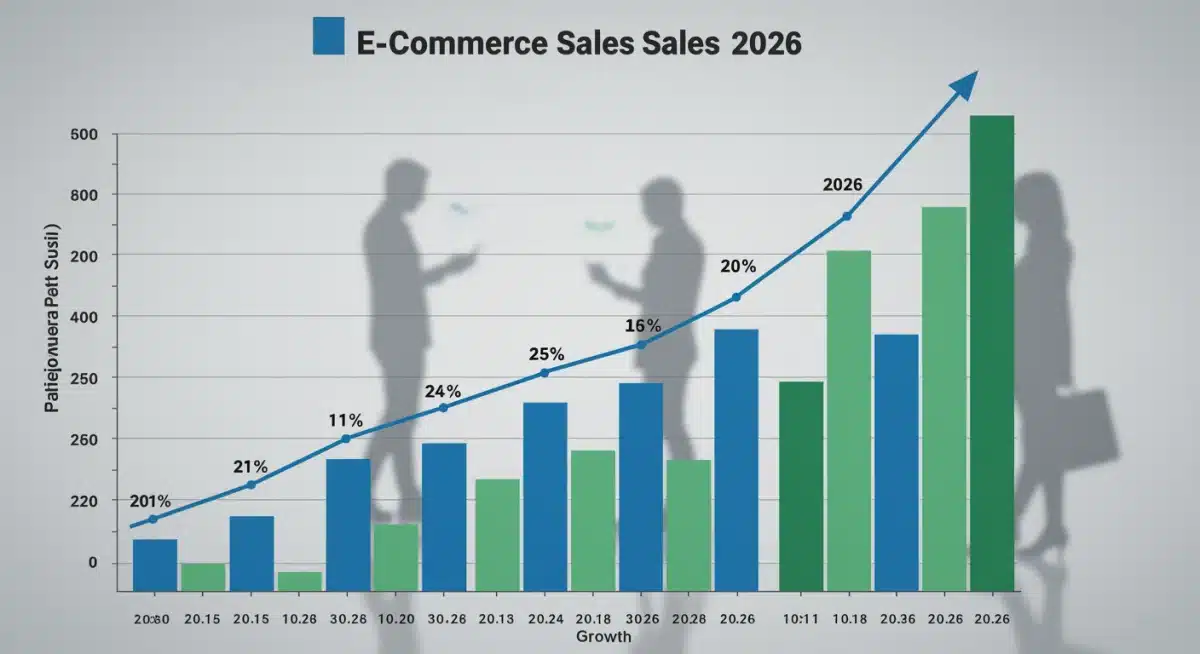
E-commerce Sales Growth 2026
emerging as a pivotal indicator of future market direction. Projections indicate an impressive 11% surge in e-commerce sales by 2026, a forecast that underscores the accelerating shift towards digital consumption.
This impending growth necessitates a thorough comparison and analysis of market shifts, offering crucial insights for businesses and consumers alike.
Understanding the drivers behind this substantial growth is paramount. From evolving consumer preferences to technological advancements, several factors are converging to redefine how goods and services are bought and sold.
Anúncios
This article provides a comprehensive overview of these retail trends, offering a factual and objective perspective on what to expect in the coming years.
Our focus is on delivering high-value information, free from hyperbole, to help readers grasp the implications of these changes.
We aim to present a clear, authoritative, and trustworthy analysis of the forces shaping the future of retail, emphasizing the significance of this projected 11% increase in e-commerce sales by 2026.
Understanding the 11% E-commerce Sales Growth Projection for 2026
The forecast of an 11% increase in e-commerce sales by 2026 signals a robust and sustained expansion within the digital retail sector.
This projection is not merely an arbitrary number but is grounded in comprehensive market research and analysis of current consumer behavior patterns and technological trajectories.
This growth rate reflects a continued acceleration of online shopping adoption, driven by convenience, broader product selections, and increasingly sophisticated digital platforms.
Businesses must recognize this trend as an imperative to adapt and innovate their strategies to capitalize on the expanding digital marketplace.
Such a significant rise in e-commerce sales by 2026 will undoubtedly reshape competitive landscapes and consumer expectations, demanding proactive responses from retailers.
The market shifts are profound, indicating a permanent alteration in how commerce is conducted globally.
Key Drivers Behind the Projected E-commerce Expansion
Several interconnected factors are propelling the anticipated 11% e-commerce sales growth by 2026, creating a dynamic environment for businesses.
Technological advancements, evolving consumer habits, and strategic investments by retailers are at the forefront of this digital revolution.
The widespread adoption of mobile devices and the continuous improvement of internet infrastructure have made online shopping more accessible than ever.
This pervasive connectivity enables consumers to engage with digital storefronts from virtually anywhere, at any time, contributing significantly to the expansion of e-commerce sales by 2026.
Furthermore, the COVID-19 pandemic acted as a powerful catalyst, accelerating digital adoption across all demographics and solidifying online shopping as a preferred method for many.
This shift has created a permanent baseline for higher e-commerce sales, setting the stage for the projected growth by 2026.
Technological Innovations Fueling Growth
Advanced technologies like artificial intelligence (AI) and machine learning (ML) are revolutionizing the e-commerce experience.
These innovations enable personalized recommendations, optimized search results, and predictive analytics, significantly enhancing the customer journey and boosting e-commerce sales.
The integration of virtual and augmented reality (VR/AR) is also beginning to offer immersive shopping experiences, allowing consumers to visualize products more effectively before purchase.
Such advancements reduce return rates and increase customer satisfaction, further driving the projected e-commerce sales growth by 2026.
- Personalized shopping experiences through AI algorithms.
- Enhanced product visualization with VR/AR technologies.
- Streamlined logistics and supply chains via automation.
- Secure and efficient payment processing systems.
Evolving Consumer Behavior and Expectations
Modern consumers prioritize convenience, speed, and ethical considerations when making purchasing decisions.
The ability to shop 24/7, coupled with fast shipping options and easy returns, has become a standard expectation that digital retailers are striving to meet.
There is also a growing demand for transparency in product sourcing and sustainable practices, influencing consumer choices and pushing brands to adopt more responsible business models.
These evolving expectations are directly contributing to the upward trajectory of e-commerce sales by 2026, as consumers gravitate towards platforms that align with their values.
The increasing willingness of consumers to purchase a wider variety of goods online, from groceries to luxury items, also plays a crucial role.
This expanded acceptance of digital channels for diverse product categories is a strong indicator of sustained e-commerce sales growth by 2026.
Comparison of Market Shifts: Traditional vs. Digital Retail
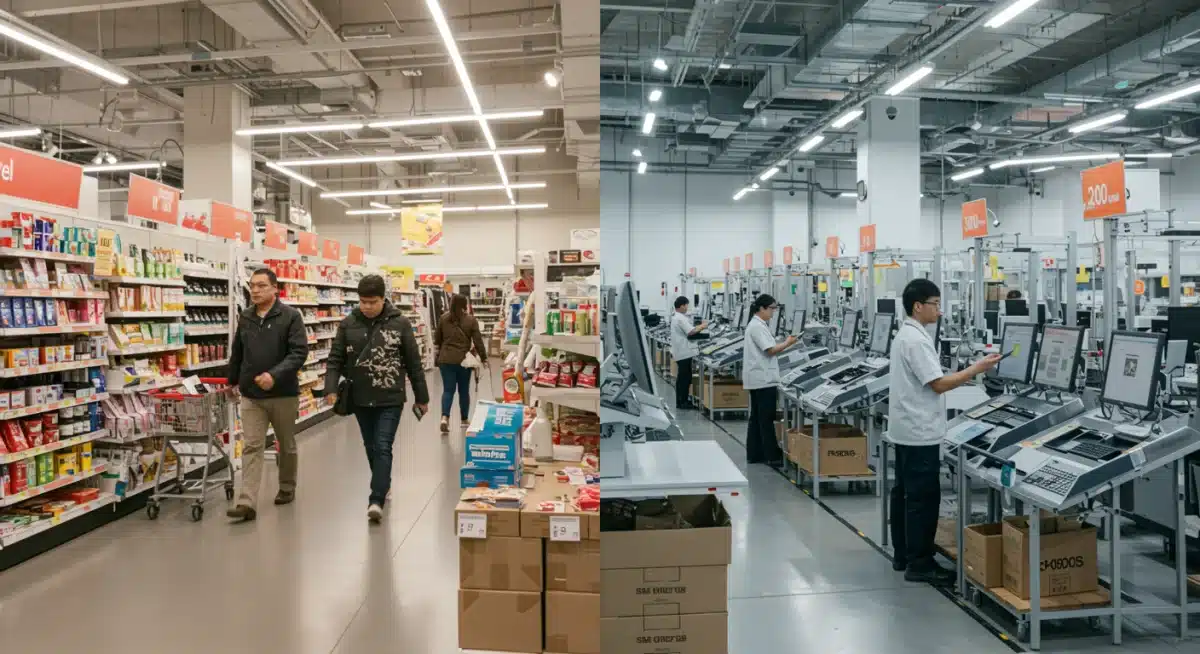
The projected 11% e-commerce sales growth by 2026 highlights a fundamental divergence in the retail sector, contrasting the dynamics of traditional brick-and-mortar stores with the burgeoning digital landscape.
While physical retail still holds significance, its growth trajectory is notably slower compared to its online counterpart.
This comparison reveals a strategic imperative for businesses to integrate both channels, creating an omnichannel experience that caters to modern consumer preferences.
Retailers who successfully blend online convenience with in-store experiences are better positioned to thrive amidst the ongoing market shifts.
The rise of e-commerce does not necessarily spell the end for physical stores, but rather mandates their evolution into experiential hubs or efficient fulfillment centers.
This adaptation is critical for navigating the significant projected e-commerce sales growth by 2026 and maintaining market relevance.
The Resilience and Evolution of Brick-and-Mortar
Despite the rapid expansion of online retail, physical stores continue to offer unique advantages, such as immediate product gratification and personalized customer service.
Many consumers still prefer to see, touch, and try on items before purchasing, especially for high-value goods.
Consequently, brick-and-mortar stores are evolving into showrooms, pick-up points for online orders, and experiential spaces that foster brand loyalty.
This strategic shift allows them to complement, rather than compete directly with, the growing trend of e-commerce sales by 2026.
The integration of technology within physical retail, such as smart mirrors and interactive displays, further enhances the in-store experience.
This fusion creates a seamless journey for the customer, supporting the overall retail ecosystem even as e-commerce sales by 2026 continue their upward climb.
The Dominance of Digital Commerce
The unparalleled convenience and vast selection offered by digital platforms are undeniable drivers of the projected e-commerce sales growth by 2026.
Online retailers can reach a global audience without the geographical constraints of physical storefronts, opening up immense market opportunities.
Moreover, the data-driven nature of e-commerce allows for highly targeted marketing campaigns and precise inventory management, leading to greater efficiency and profitability.
These operational advantages contribute significantly to the sustained expansion of e-commerce sales by 2026.
- Global reach and accessibility for diverse product ranges.
- Data-driven marketing and personalized consumer engagement.
- Operational efficiencies through advanced logistics and automation.
- Lower overhead costs compared to traditional retail.
Regional Analysis: E-commerce Sales Growth by 2026 in the US
Within the United States, the projected 11% e-commerce sales growth by 2026 is influenced by specific regional factors, including population density, internet penetration, and local economic conditions.
Urban centers, with their higher concentration of tech-savvy consumers, often lead in digital adoption.
However, rural and suburban areas are also experiencing significant increases in online shopping, spurred by improved broadband access and the convenience it offers.
This widespread adoption across diverse geographies contributes to the robust national forecast for e-commerce sales by 2026.
Policy initiatives aimed at enhancing digital infrastructure and fostering small business e-commerce capabilities further support this growth.
These localized efforts are critical in maximizing the potential of the projected e-commerce sales by 2026 across all segments of the US market.
Impact on Urban and Suburban Markets
Urban areas have long been at the forefront of e-commerce adoption, driven by a dense population of early adopters and a strong logistics infrastructure.
The convenience of online shopping is particularly appealing in bustling city environments, where time is often a premium.
Suburban markets are rapidly catching up, with families and professionals increasingly relying on e-commerce for everyday necessities and specialized purchases.
The growth in these areas is a key component of the overall 11% e-commerce sales growth by 2026, reflecting a broadening consumer base.
This expansion into suburban regions indicates a normalization of online shopping habits, moving beyond niche segments to become a mainstream activity.
The continued penetration into these markets is essential for meeting the ambitious targets for e-commerce sales by 2026.
Growth in Rural E-commerce Adoption
Historically, rural areas faced challenges in e-commerce due to limited internet access and less developed delivery networks.
However, significant investments in broadband infrastructure are bridging this digital divide, opening up new opportunities for online retailers.
The convenience of having goods delivered directly to their homes is particularly valuable for consumers in remote locations, where access to diverse retail options might be limited.
This demographic is increasingly contributing to the overall e-commerce sales growth by 2026.
As logistics companies expand their reach and optimize delivery routes, rural e-commerce is set to become an even more powerful force.
This inclusion of previously underserved markets is a critical factor in achieving the projected 11% e-commerce sales growth by 2026.
Emerging Retail Trends Influencing E-commerce Sales by 2026
Beyond the fundamental shift to online shopping, several emerging retail trends are specifically shaping the trajectory of e-commerce sales growth by 2026.
These trends reflect changing consumer values, technological advancements, and innovative business models designed to enhance the digital shopping experience.
Sustainability, ethical sourcing, and personalized experiences are no longer niche concerns but mainstream expectations driving purchasing decisions.
Retailers who successfully integrate these elements into their e-commerce strategies are likely to see significant gains in the coming years.
The convergence of social media and commerce, known as social commerce, is also becoming a powerful force, leveraging influencer marketing and direct purchasing options within popular platforms.
This trend is set to play a crucial role in the projected increase in e-commerce sales by 2026.
The Rise of Social Commerce and Live Shopping
Social commerce, where products are sold directly through social media platforms, is rapidly gaining traction, especially among younger demographics.
This trend blurs the lines between entertainment, social interaction, and shopping, creating a highly engaging purchase environment.
Live shopping events, often featuring influencers demonstrating products in real-time, generate excitement and urgency, driving immediate sales.
This interactive approach fosters a sense of community and authenticity, contributing significantly to the expansion of e-commerce sales by 2026.
- Direct purchasing options within social media apps.
- Influencer-led product demonstrations and reviews.
- Limited-time offers during live shopping events.
- Community engagement and real-time interaction with brands.
Subscription Models and Personalized Services
Subscription boxes and recurring delivery services continue to grow in popularity, offering convenience and curated experiences to consumers.
From beauty products to gourmet foods, these models provide a steady revenue stream for businesses and predictable access for customers.
Personalization, driven by AI and data analytics, allows retailers to offer highly relevant product recommendations and tailored marketing messages.
This bespoke approach enhances customer loyalty and drives repeat purchases, directly impacting the positive forecast for e-commerce sales by 2026.
The ability to customize products and services further empowers consumers, making them feel more connected to the brands they choose. This focus on individual preferences is a cornerstone of the projected e-commerce sales growth by 2026.
Challenges and Opportunities in Achieving 11% E-commerce Sales Growth
While the projection for 11% e-commerce sales growth by 2026 is optimistic, it is not without its challenges. Intense competition, evolving privacy regulations, and the need for robust cybersecurity present significant hurdles that businesses must navigate effectively.
Maintaining customer trust in an increasingly complex digital environment requires constant vigilance and adaptation to new threats and regulatory frameworks.
Retailers must invest in secure platforms and transparent data practices to sustain consumer confidence and ensure continued e-commerce sales growth.
However, these challenges also present unique opportunities for innovation, allowing agile businesses to differentiate themselves through superior customer service, cutting-edge technology, and strong ethical commitments.
The pursuit of the 11% e-commerce sales growth by 2026 will reward those who embrace proactive solutions.
Navigating Supply Chain Complexities
Global supply chain disruptions have highlighted the fragility of traditional logistics models, prompting e-commerce businesses to rethink their strategies.
Diversifying suppliers, investing in localized fulfillment centers, and leveraging advanced analytics are becoming crucial for resilience.
Efficient last-mile delivery remains a critical factor in customer satisfaction and a competitive differentiator.
Innovations in drone delivery, autonomous vehicles, and optimized routing are continually being explored to meet the demands of growing e-commerce sales by 2026.
Overcoming these logistical hurdles is essential for ensuring timely deliveries and a seamless customer experience, directly contributing to positive perceptions and sustained e-commerce sales growth by 2026.
Ensuring Data Security and Privacy
As e-commerce transactions become more prevalent, the importance of data security and consumer privacy intensifies. Breaches of personal information can severely damage brand reputation and erode customer trust, impacting future e-commerce sales.
Compliance with global data protection regulations, such as GDPR and CCPA, is mandatory for businesses operating in the digital space.
Implementing robust encryption, multi-factor authentication, and regular security audits are non-negotiable practices.
Building a transparent data privacy policy and clearly communicating it to customers fosters confidence and strengthens the relationship between consumers and online retailers.
This commitment to security is vital for achieving the projected e-commerce sales growth by 2026.
Future Outlook: Beyond the 11% E-commerce Sales Growth by 2026
Looking beyond the immediate projection of 11% e-commerce sales growth by 2026, the future of retail promises even more integrated and immersive experiences.
The lines between physical and digital will continue to blur, creating a truly omnichannel environment where consumers transition seamlessly between different touchpoints.
Emerging technologies like the metaverse and advanced AI will likely usher in new forms of digital commerce, offering virtual storefronts and hyper-personalized shopping journeys.
These innovations will further accelerate the evolution of e-commerce sales, extending well past 2026.
Businesses that invest in continuous innovation and remain agile in adapting to technological advancements and shifting consumer preferences will be best positioned for long-term success.
The current 11% e-commerce sales growth by 2026 is just a stepping stone in a much larger transformation.
| Key Trend | Impact on E-commerce Sales Growth 2026 |
|---|---|
| Mobile Commerce | Increased accessibility and convenience drive higher transaction volumes. |
| AI Personalization | Tailored shopping experiences boost conversion rates and customer loyalty. |
| Social Commerce | Direct sales through social platforms expand reach and engagement. |
| Sustainable Practices | Attracts environmentally conscious consumers, enhancing brand appeal. |
Frequently Asked Questions About E-commerce Sales Growth 2026
E-commerce sales are projected to grow by 11% by 2026. This significant increase reflects ongoing shifts in consumer behavior, technological advancements, and strategic investments by retailers to enhance their digital presence and offerings.
Key drivers include widespread mobile adoption, AI-powered personalization, social commerce integration, and improved logistics. The convenience and broader selection offered by online platforms continue to attract more consumers, solidifying these trends.
Traditional retail will need to adapt by integrating with online channels, focusing on experiential shopping, and serving as fulfillment centers. The 11% E-commerce Sales Growth 2026 emphasizes the need for an omnichannel strategy rather than a purely physical one.
Yes, challenges include intense competition, managing complex supply chains, ensuring robust data security, and complying with evolving privacy regulations. Overcoming these requires continuous innovation and strategic investment in technology and customer trust.
Emerging trends include social commerce, live shopping, subscription models, and hyper-personalization. These innovations enhance the digital shopping experience, drive engagement, and are crucial for sustained E-commerce Sales Growth 2026 and beyond.
Perspectives on the Future of Retail
The projected 11% E-commerce Sales Growth in 2026 is more than just a statistic; it represents a fundamental reshaping of the retail industry.
Businesses that recognize and adapt to these profound market shifts will be best positioned for future success.
The ongoing integration of technology, evolving consumer demands, and the imperative for sustainable practices will continue to define the competitive landscape.
Looking ahead, the focus will increasingly be on creating seamless, personalized, and ethically sound shopping experiences across all channels.
This requires continuous investment in digital infrastructure, data analytics, and innovative customer engagement strategies. The journey toward this growth is a clear indicator of a digital-first future.
Stakeholders must closely monitor technological advancements and consumer behavior to remain agile. The implications of this growth extend beyond mere sales figures, influencing employment, supply chains, and urban planning.
To better understand the high-level shifts driving these changes, explore the comprehensive Deloitte Retail Industry Outlook, which provides deep dives into the trends defining the 2026 market.