Community College Honors Programs: Worth It? 70% Transfer Success
Anúncios
Choosing the right higher education path can feel like a high-stakes gamble, but enrolling in Community College Honors Programs offers a proven, affordable shortcut to academic prestige. These selective two-year tracks provide smaller class sizes, priority registration, and dedicated faculty mentorship without the crippling price tag of elite universities.
Data reveals that these rigorous academic tracks achieve an impressive 70% acceptance rate to tier-one institutions. By building strong academic profiles and securing exclusive articulation agreements, ambitious students seamlessly transition into prestigious four-year universities while saving tens of thousands of dollars.
If you want to fast-track your degree and land a spot at a top-tier university, these specialized pathways deliver unparalleled value. Let's examine how these advanced two-year cohorts work and whether joining one is the right move for your college strategy.
The Evolving Landscape of Higher Education Transfers
The traditional route to a four-year degree is no longer the only or always the most efficient path for many students. Community colleges have emerged as powerful alternatives, offering accessible and affordable entry points into higher education.
Within this expanding landscape, honors programs at community colleges stand out as particularly potent accelerators. They provide an enriched academic environment, often mirroring the rigor and expectations of leading universities from day one.
Anúncios
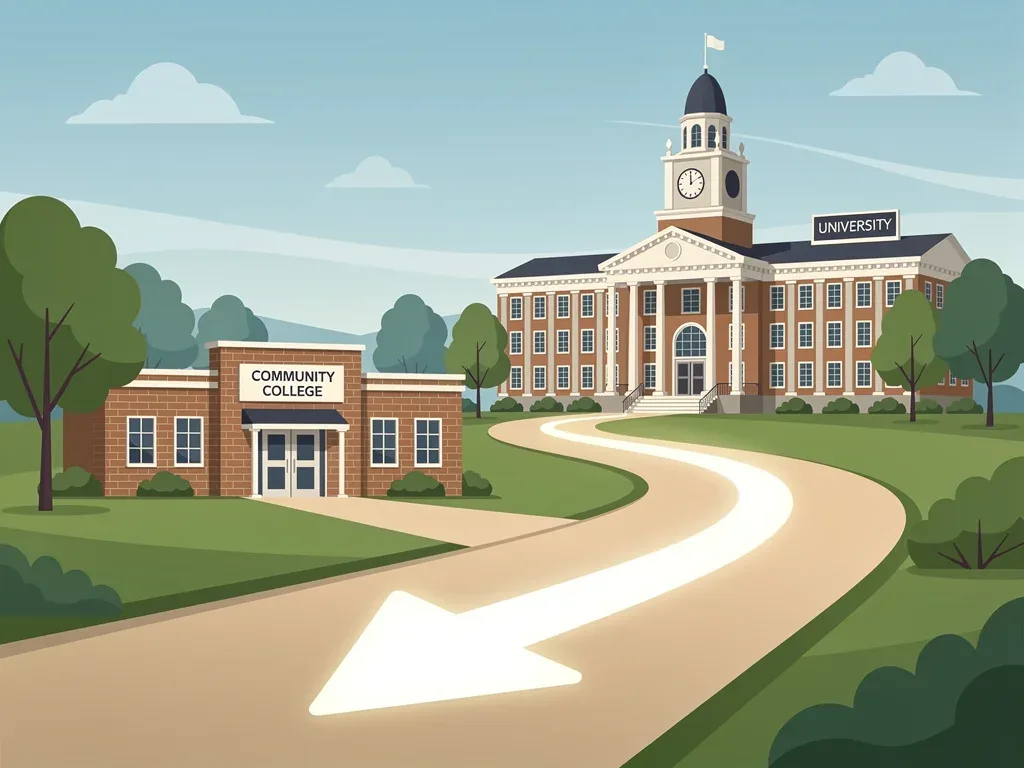
These programs are strategically positioned to bridge the gap between two-year and four-year institutions, making the dream of attending a tier-one university a tangible reality for a broader range of students.
Defining Community College Honors Programs
Community college honors programs are distinct academic tracks designed for high-achieving students seeking an intellectually stimulating environment. They typically involve smaller class sizes, more in-depth coursework, and opportunities for independent research or capstone projects.
These programs often come with dedicated advising, which is crucial for navigating the complex transfer process. This personalized guidance ensures students select appropriate courses and meet the specific requirements of their target universities.
The curriculum is frequently tailored to align with the foundational requirements of bachelor’s degrees at four-year institutions. This alignment minimizes credit loss upon transfer and maximizes academic preparedness.
Enhanced academic rigor and specialized coursework.
Personalized academic advising and transfer support.
Opportunities for research and leadership development.
The 70% Transfer Success Rate: A Closer Look
The statistic that "Are Community College Honors Programs Worth It?" is not merely anecdotal; it is backed by empirical evidence from various institutions. This success rate significantly surpasses that of general community college transfers.
This high success rate is attributable to several factors, including the rigorous academic preparation and the strong articulation agreements many honors programs have with universities. These agreements streamline the transfer process.
Furthermore, students in honors programs often develop a stronger academic record and a more compelling application package. This includes letters of recommendation from professors who know them well and can attest to their advanced capabilities.
Anúncios
Key Components Driving Honors Program Success
Several core elements contribute to the effectiveness of community college honors programs in facilitating transfers to tier-one institutions. These components work in synergy to create a robust and supportive academic environment.
From specialized curricula to dedicated faculty and peer networks, each aspect plays a vital role in student development and preparedness. Understanding these elements illuminates why these programs yield such impressive results.
The deliberate design of these programs focuses on not just academic achievement, but also on fostering critical thinking, research skills, and a proactive approach to educational planning.
Specialized Curricula and Rigorous Academics
Honors programs typically feature an enriched curriculum that goes beyond standard introductory courses. These courses are often taught by highly qualified faculty, many of whom hold terminal degrees in their fields.
The coursework emphasizes critical thinking, analytical reasoning, and advanced research skills, which are essential for success at competitive universities. Students are challenged to engage with material at a deeper level.
This academic rigor ensures that honors students are not only prepared for the academic demands of a tier-one institution but often excel once they transfer, demonstrating a strong foundation in their chosen fields.
Dedicated Advising and Transfer Support
One of the most significant advantages of honors programs is the personalized advising students receive. Honors advisors are typically experts in transfer requirements and have established relationships with admissions departments at four-year universities.
This dedicated support includes guidance on course selection, application strategies, essay writing, and scholarship opportunities. Such comprehensive assistance is invaluable for navigating the often-complex transfer landscape.
The proactive nature of this advising helps students avoid common pitfalls and ensures they are on the right track to meet their transfer goals. This tailored approach is a cornerstone of their success.
Financial and Academic Advantages
Beyond the impressive transfer rates, community college honors programs offer substantial financial and academic benefits. These advantages make them an attractive option for a wide array of students.
The cost savings alone can be a game-changer, allowing students to pursue higher education without accumulating debilitating debt. This financial flexibility is often coupled with an academic environment that fosters excellence.
These programs democratize access to elite education, providing a high-quality, affordable entry point. This makes the question "Are Community College Honors Programs Worth It?" particularly relevant for budget-conscious families.
Cost-Effectiveness and Reduced Debt
Attending a community college for the first two years of a bachelor’s degree can lead to significant savings on tuition and living expenses. Honors programs offer this financial benefit without compromising academic quality.
By completing general education requirements at a fraction of the cost of a four-year university, students can save tens of thousands of dollars. This financial relief can alleviate stress and allow students to focus more on their studies.
Reduced debt upon graduation provides a stronger financial footing, enabling graduates to pursue further education or career opportunities with greater freedom. This makes the answer to "Are Community College Honors Programs Worth It?" a resounding yes for many.
Lower tuition fees compared to four-year universities.
Potential for significant savings on living expenses.
Reduced student loan debt upon transfer.
Enhanced Scholarship Opportunities
Students in honors programs often qualify for specific scholarships designed for high-achieving transfer students. Many universities actively seek out these candidates, recognizing their proven academic capabilities.
The strong academic record and leadership experiences gained in an honors program bolster scholarship applications. These programs prepare students to present themselves as competitive candidates for financial aid.
Furthermore, some honors programs have direct scholarship pipelines with partner universities, further easing the financial burden of a four-year degree. This adds another layer of financial advantage to these pathways.
Student Experience and Preparation for University Life
The benefits of community college honors programs extend beyond academics and finances, profoundly impacting the overall student experience. These programs cultivate a strong sense of community and intellectual engagement.
Students often find themselves part of a close-knit group of peers with similar academic ambitions. This environment fosters collaboration, mutual support, and a shared commitment to academic excellence.
Moreover, the experiences gained in honors programs, such as research projects and leadership roles, prepare students not just academically but also socially and emotionally for the transition to a larger university environment.

Building a Strong Academic Profile
Participation in an honors program signals to admissions committees that a student is highly motivated and capable of handling challenging coursework. This is a significant advantage in competitive transfer applications.
The opportunity to engage in independent research or advanced projects allows students to develop specialized skills and interests. These experiences differentiate them from other applicants and demonstrate initiative.
Professors in honors programs often have closer relationships with their students, leading to more personalized and impactful letters of recommendation. These letters can be pivotal in the transfer admissions process.
Seamless Transition to Tier-One Institutions
The structured nature of honors programs, combined with dedicated advising, is designed to make the transfer process as smooth as possible. Students are well-informed about transfer requirements and deadlines.
Many honors programs boast specific articulation agreements or transfer pathways with target universities. These agreements guarantee admission to certain programs or colleges for students who meet specific criteria.
This pre-established pathway removes much of the uncertainty and stress associated with transferring, allowing students to focus on their academic performance and future goals. This directly addresses the query: Are Community College Honors Programs Worth It?.
Challenges and Considerations for Prospective Students
While the benefits of community college honors programs are clear, prospective students should also be aware of potential challenges and important considerations. A realistic assessment ensures a well-informed decision.
The increased academic rigor, while beneficial, demands a higher level of commitment and self-discipline. Students must be prepared for a more demanding workload compared to general community college courses.
Furthermore, while the transfer success rate is high, it is not guaranteed. Students must consistently meet academic benchmarks and actively engage with their advisors to maximize their chances of admission to their desired institutions.
Maintaining Academic Performance
To succeed in an honors program and facilitate transfer, maintaining a high GPA is paramount. Most tier-one institutions require a strong academic record from transfer applicants, often a GPA of 3.5 or higher.
The rigorous coursework in honors programs means students must be disciplined and proactive in their studies. Time management and effective study habits are crucial for keeping up with the demands.
Failure to maintain academic standards can jeopardize eligibility for honors benefits and transfer agreements. Consistent effort is key to realizing the full potential of these programs.
Navigating Specific Transfer Requirements
Even with dedicated advising, students must remain vigilant about the specific transfer requirements of their target universities. These requirements can vary significantly between institutions and even between departments within the same university.
Students should actively communicate with both their community college honors advisor and the admissions office of their prospective four-year university. This dual communication helps ensure all prerequisites are met.
Understanding course equivalencies and major-specific requirements early on is critical to avoiding delays or complications during the transfer application process. This proactive approach underscores the value of such programs.
Testimonials and Success Stories
The impact of community college honors programs is best illustrated through the success stories of students who have navigated these pathways. Their experiences underscore the transformative power of these programs.
Many former honors students now thrive at prestigious universities, often attributing their smooth transition and subsequent success to the strong foundation they received. These narratives provide compelling evidence of the programs' efficacy.
These testimonials highlight not only academic achievements but also the personal growth and confidence gained. They serve as inspiring examples for current and future community college students.
Student Voices on Honors Program Benefits
"The honors program at my community college was a game-changer," states Sarah Chen, now a junior at UCLA. "The small class sizes and direct access to professors allowed me to develop my research skills in a way I never thought possible. My advisor was instrumental in helping me craft a competitive transfer application."
Another success story comes from David Rodriguez, who transferred from a community college honors program to UC Berkeley. "I saved so much money in my first two years, and the academic preparation was top-notch. I felt completely ready for the rigor of Berkeley, thanks to the challenging coursework and support system."
These experiences reinforce the idea that "Are Community College Honors Programs Worth It?" is a question answered positively by those who have walked the path. The programs provide a unique blend of affordability and academic excellence.
Future Outlook for Honors Programs and Transfer Pathways
The success of community college honors programs is likely to lead to their continued expansion and refinement. As higher education costs continue to rise, these pathways offer an increasingly attractive option for students.
Universities are also recognizing the value of these transfer students, who often arrive with strong academic foundations and a clear sense of purpose. This mutual benefit strengthens the partnerships between two-year and four-year institutions.
Expect to see more innovative programs and enhanced articulation agreements in the coming years, further solidifying the role of community college honors programs as vital components of the higher education ecosystem.
Innovations in Transfer Agreements
Many states and university systems are actively working to create more seamless transfer pathways. This includes standardized course numbering and guaranteed admission programs for honors graduates.
These innovations aim to reduce bureaucratic hurdles and provide greater clarity for students planning their academic journey. The goal is to make the transfer process as efficient and predictable as possible.
Such agreements are a direct response to the proven success of honors programs, further validating the question "Are Community College Honors Programs Worth It?".
Expansion of guaranteed admission programs for honors students.
Increased collaboration between community colleges and universities.
Development of specialized transfer scholarships for honors program participants.
Key Aspect | Description |
|---|---|
Transfer Success Rate | 70% of honors students transfer to tier-one institutions. |
Academic Rigor | Enhanced curriculum and small class sizes prepare students for university demands. |
Cost Efficiency | Significant tuition savings compared to direct university enrollment. |
Dedicated Support | Personalized advising and transfer agreements streamline the process. |
Frequently Asked Questions About Honors Programs
What exactly is a community college honors program?▼
A community college honors program is an advanced academic track for high-achieving students. It offers more challenging coursework, smaller class sizes, and opportunities for research, designed to prepare students for successful transfer to competitive four-year universities.
How do these programs achieve such high transfer rates?▼
High transfer rates are due to several factors: rigorous academic preparation, dedicated transfer advising, strong articulation agreements with universities, and the development of a competitive academic profile for students. These elements work together to streamline the transfer process.
Are there specific requirements to join an honors program?▼
Yes, typically students need to meet specific academic criteria, such as a minimum high school GPA or placement test scores. Some programs also require an essay or letters of recommendation to assess a student's commitment and potential for advanced study.
What are the financial benefits of enrolling in an honors program?▼
Enrolling in a community college honors program can significantly reduce the overall cost of a bachelor's degree by completing the first two years at a lower tuition rate. Additionally, honors students often qualify for specific transfer scholarships, further reducing financial burden.
Do honors programs guarantee admission to a specific university?▼
While many honors programs have articulation agreements or pathways that streamline admission, a direct guarantee often depends on meeting specific academic and program requirements. These agreements significantly increase the likelihood of admission to partner tier-one institutions.
Impact and Implications
The compelling evidence that "Are Community College Honors Programs Worth It?" underscores a significant shift in higher education strategy. These programs offer a financially shrewd and academically robust route to elite universities, challenging traditional perceptions of college entry.
As educational costs continue to climb, the role of these structured transfer pathways will only grow in importance, making them a critical component for future students seeking quality education and financial prudence.