Job Market Update: Unemployment Rate Steady at 3.9% in January 2026
Anúncios
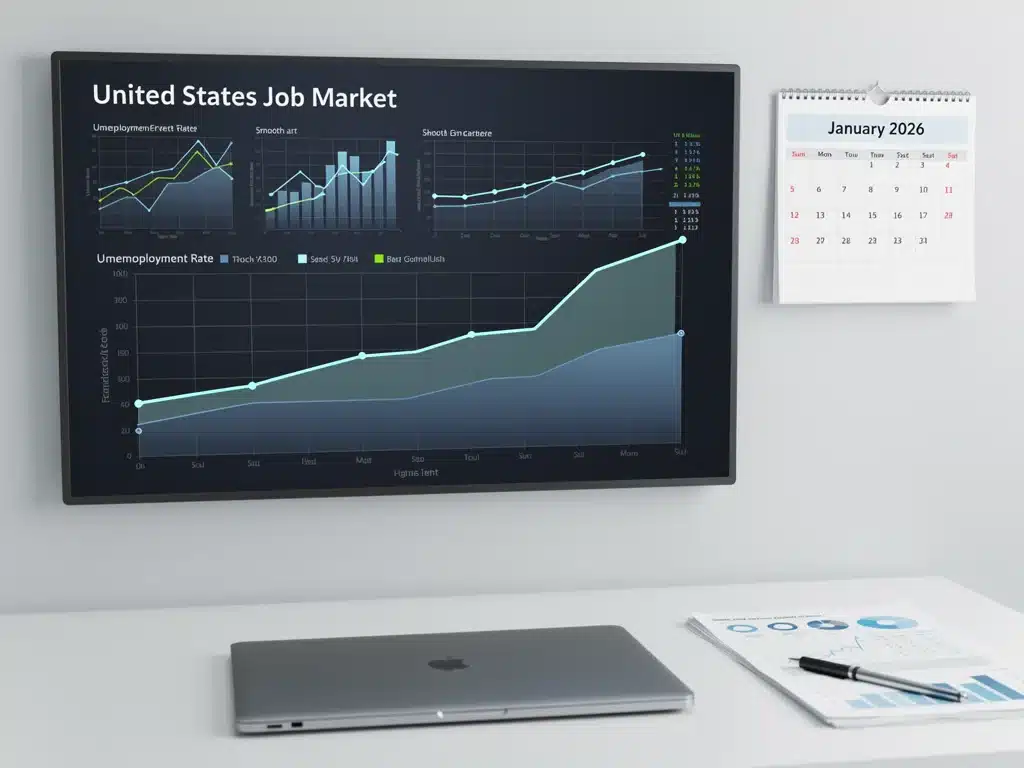
The Job Market Update 2026 confirms the U.S. unemployment rate held steady at 3.9% in January, signaling economic stability after a period of dynamic shifts.
This consistent figure offers a crucial moment for strategic planning, providing key insights for both job seekers navigating their careers and employers shaping their workforce strategies.
Below, we examine the report’s impact across various sectors and its implications for the evolving employment landscape.
Anúncios
Analyzing the January 2026 Unemployment Rate
The Bureau of Labor Statistics (BLS) announced that the national unemployment rate remained at 3.9% in January 2026, a figure that has largely been consistent over recent months.
This stability suggests a mature phase in the post-pandemic economic recovery, indicating neither significant hiring surges nor widespread layoffs.
Anúncios
This steady rate provides a crucial snapshot of the current economic health, reflecting a labor market that continues to absorb workers while managing inflationary pressures.
Experts are closely examining the underlying data to understand the nuances behind this headline figure.
The consistency in the unemployment rate allows for more predictable forecasting and strategic planning for businesses and individuals alike. It signals a period where deliberate decisions, rather than reactive measures, can yield better outcomes.
What This Stability Means for Job Seekers
For job seekers, a stable unemployment rate of 3.9% indicates a competitive yet accessible market.
While not experiencing the rapid hiring seen in earlier recovery phases, opportunities remain robust across various industries, particularly in sectors experiencing growth.
This environment necessitates a strategic approach to job searching, focusing on skill development and targeted applications. Understanding which industries are still expanding can significantly enhance a job seeker’s prospects.
The Job Market Update 2026 suggests that while the overall rate is stable, specific sectors may still offer abundant roles. Adaptability and continuous learning are key for those looking to advance or transition careers.
Navigating a Stable Job Market
Job seekers should prioritize refining their resumes and cover letters to highlight relevant skills and experiences.
Networking remains a powerful tool, as many positions are filled through professional connections rather than public postings.
Furthermore, investing in upskilling or reskilling programs can provide a significant competitive edge. The demand for specialized skills continues to outpace the supply in many technical and service-oriented fields.
- Focus on in-demand skills and certifications.
- Leverage professional networks and online platforms.
- Tailor applications to specific company needs.
- Consider remote opportunities that expand geographic reach.
Implications for Employers in the Current Climate
Employers face a nuanced landscape where retaining top talent is as critical as attracting new hires.
The stable unemployment rate implies that while the pool of available workers isn’t shrinking dramatically, competition for skilled professionals remains high.
This environment places a premium on competitive compensation packages, robust benefits, and a positive company culture. Employers must differentiate themselves to stand out in a market where candidates have options.
The Job Market Update 2026 highlights the ongoing need for strategic workforce planning. Proactive measures in talent development and employee engagement are essential for sustained organizational success.
Strategies for Talent Attraction and Retention
Companies are increasingly investing in employee development programs to upskill their existing workforce, reducing the need for external hiring in certain areas.
Flexible work arrangements and a focus on work-life balance are also proving to be powerful attractors.
Moreover, transparent communication about company values and growth opportunities can significantly boost employer branding. A strong brand helps draw in candidates who align with the organization’s mission.
- Offer competitive salaries and comprehensive benefits.
- Invest in employee training and career development.
- Cultivate a strong, inclusive company culture.
- Embrace flexible work options where feasible.

Sector-Specific Trends and Variances
While the overall unemployment rate is stable, a deeper dive into sector-specific data reveals varying conditions across industries.
Technology, healthcare, and renewable energy continue to show strong growth, indicating a robust demand for talent in these areas.
Conversely, some traditional sectors may experience slower growth or even contractions, requiring workers to adapt their skill sets or consider transitions. These disparities underscore the importance of understanding industry-specific dynamics.
The Job Market Update 2026 emphasizes that a single national figure often masks significant underlying differences. Both job seekers and employers benefit from granular analysis of their respective fields.
Growth Sectors and Emerging Opportunities
The technology sector, particularly in areas like artificial intelligence, cybersecurity, and data science, continues to be a hotbed for innovation and employment.
Healthcare, driven by an aging population and technological advancements, also sustains high demand.
Renewable energy and green technology are rapidly expanding, creating new roles and career pathways. These sectors often require specialized skills, pointing to the value of continuous education and professional development.
Meanwhile, some retail and manufacturing segments might face challenges due to automation and shifting consumer behaviors. This necessitates a strategic re-evaluation of workforce needs and talent acquisition approaches.
Economic Indicators Influencing the Job Market
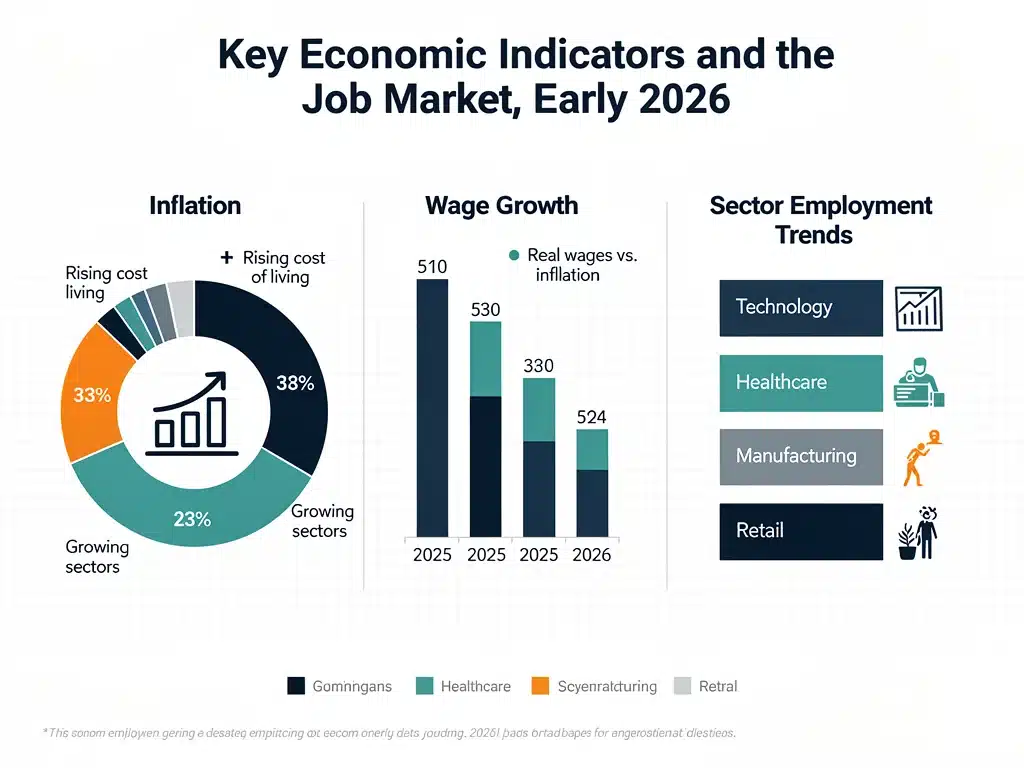
Several key economic indicators beyond the unemployment rate influence the overall health of the job market. Inflation, wage growth, and consumer spending all play significant roles in shaping employment trends and employer decisions.
The Federal Reserve’s monetary policy, particularly interest rate adjustments, also has a ripple effect on business investment and hiring plans. A stable inflation rate, for example, can lead to more predictable economic conditions.
Understanding these interconnected factors provides a comprehensive view of the Job Market Update 2026. It allows for a more informed assessment of future trends and potential challenges.
Wage Growth and Inflationary Pressures
Wage growth, while steady, is being closely monitored against inflation. If wages do not keep pace with the cost of living, consumer purchasing power can diminish, impacting overall economic activity and, consequently, the job market.
Federal Reserve policymakers are balancing the need to control inflation with the goal of maintaining a healthy labor market. Their decisions on interest rates can accelerate or decelerate economic activity.
The interplay between these macroeconomic forces makes the Job Market Update 2026 a dynamic and complex subject. Businesses and individuals must remain agile to navigate these economic currents effectively.
Future Outlook and Projections for 2026
Looking ahead, economists project a continued period of relative stability for the US job market throughout 2026. While major shifts are not anticipated, gradual adjustments in industry demand and skill requirements are expected.
Technological advancements, particularly in AI and automation, will likely reshape certain job functions, creating new roles while potentially reducing others. This necessitates a forward-thinking approach to career planning and workforce development.
The Job Market Update 2026 sets the stage for a year where adaptability will be a key determinant of success for both individuals and organizations. Proactive engagement with emerging trends will be crucial.
Anticipated Shifts and Long-Term Trends
The gig economy is expected to continue its expansion, offering more flexible work arrangements but also requiring workers to manage their own benefits and career development. Remote and hybrid work models are also likely to remain prevalent.
Demographic shifts, including an aging workforce and evolving generational preferences, will influence talent management strategies. Companies must cater to a diverse range of employee needs and expectations.
The global economic climate will also play a role, with international trade and geopolitical events potentially impacting domestic employment. The Job Market Update 2026 provides a foundation for monitoring these broader influences.
Regional Disparities in Employment
While the national unemployment rate offers a broad overview, significant regional disparities persist across the United States.
Certain states and metropolitan areas may experience higher or lower unemployment rates due to local industry concentrations and economic conditions.
For job seekers, understanding these regional differences can inform decisions about relocation or focusing job searches within specific geographical areas. Employers, too, must tailor their recruitment strategies to local labor markets.
The Job Market Update 2026 underscores that a national average does not always reflect the lived realities in every community. Local economic reports provide essential context for localized employment strategies.
Impact of Localized Industries
Regions with a strong presence in growing sectors like tech or healthcare tend to exhibit lower unemployment rates and higher wage growth. Conversely, areas heavily reliant on declining industries may face more significant challenges.
Government initiatives and local economic development programs can also influence regional job markets. These efforts aim to attract new businesses and foster job creation in specific areas.
Therefore, a comprehensive understanding of the Job Market Update 2026 requires considering both national trends and localized economic factors. This dual perspective offers a more accurate picture of employment opportunities and challenges.
| Key Point | Brief Description |
|---|---|
| Unemployment Stability | Rate holds steady at 3.9% in January 2026, indicating market equilibrium. |
| Job Seeker Strategy | Focus on skill development, networking, and targeted applications for success. |
| Employer Focus | Prioritize talent retention, competitive packages, and strong company culture. |
| Sector Variances | Growth in tech and healthcare contrasts with slower trends in other industries. |
Frequently Asked Questions About the Job Market Update 2026
A 3.9% unemployment rate, as seen in the Job Market Update 2026, generally indicates a healthy and stable economy. It suggests that most individuals who are willing and able to work can find employment, without the labor market being excessively tight or loose.
The 3.9% unemployment rate is historically low, often below the long-term average for the United States. This reflects a period of strong labor market performance following various economic cycles, making the Job Market Update 2026 particularly noteworthy.
Yes, the Job Market Update 2026 shows that sectors like technology, healthcare, and renewable energy are experiencing robust growth. Conversely, some traditional manufacturing and retail segments may face challenges, requiring adaptation from workers and businesses.
In a stable market, job seekers should focus on upskilling, networking, and tailoring applications to specific roles. Highlighting specialized skills and demonstrating adaptability can provide a competitive edge, according to the Job Market Update 2026 analysis.
Employers must prioritize talent retention and offer competitive compensation and benefits. The stable market means skilled workers have options, so fostering a positive company culture and investing in employee development are crucial for successful hiring, as indicated by the Job Market Update 2026.
Looking Ahead: The Continued Evolution of the Job Market
The steady unemployment rate presented in the Job Market Update 2026 for January signals a mature and resilient labor market.
This stability, however, does not imply stagnation; rather, it underscores a continuous evolution.
Both job seekers and employers must remain vigilant, adapting to technological advancements, shifting industry demands, and macroeconomic forces that will undoubtedly shape the employment landscape throughout the year.
The focus now shifts to qualitative aspects of employment, such as wage growth relative to inflation and the availability of skilled labor in high-growth sectors, offering a dynamic outlook for the coming months.
To stay informed on how these economic factors are shaping the workforce, you can read more about why the job market is likely to remain steady and what it means for the financial landscape ahead.